Best Outdoor Kitchen Countertop Materials: Granite vs Stone vs Concrete
Compare outdoor kitchen countertop materials for Charlotte weather. Granite, natural stone, concrete, and tile — durability, cost, and maintenance compared.
Michael Carter
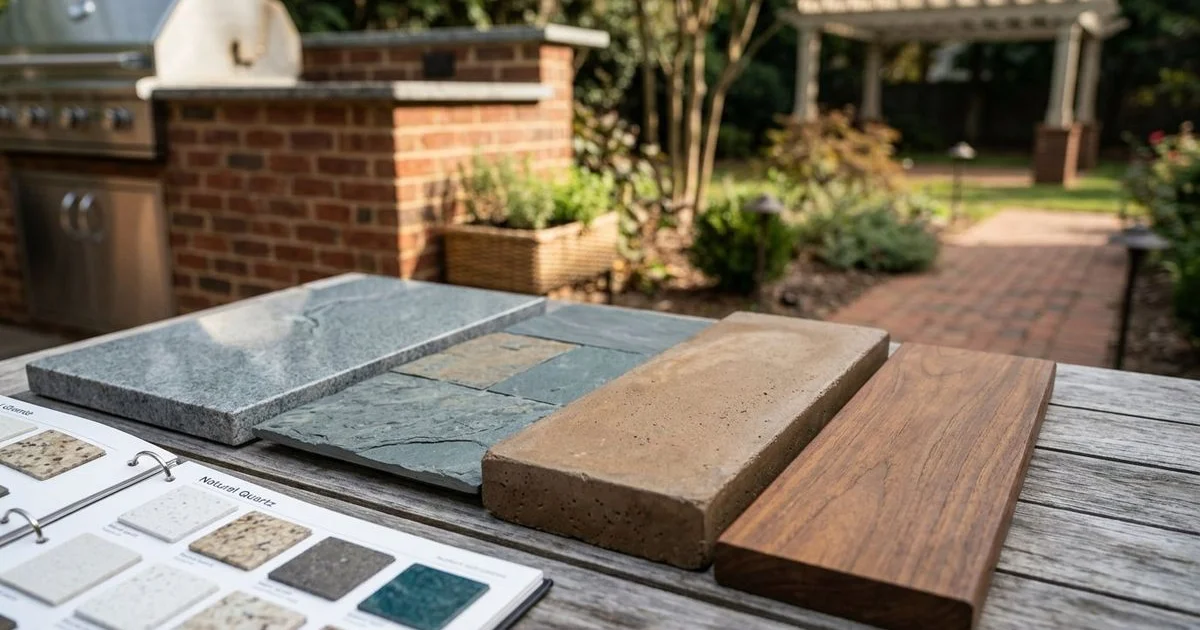
We often see homeowners struggle when selecting materials for backyard renovations. The heavy rain and intense summer heat in Charlotte can quickly ruin standard indoor surfaces. A poor choice will crack or stain within a few short seasons, which is why comparing the best outdoor kitchen countertop materials: granite vs stone vs concrete is the smartest first step.
Our professional service team, trusted builders of outdoor kitchens in Charlotte, has spent years replacing deteriorated outdoor countertops. Let’s look at the data to understand which options truly hold up. This guide breaks down the most popular surfaces to help you make a smart, climate-appropriate decision.
Granite: The Gold Standard for Outdoor Kitchens
We consistently recommend granite as the premier material for exterior cooking spaces. This natural stone is incredibly hard and scratch-resistant. It boasts an impressive heat resistance limit, with thermal testing proving it can handle up to 1,200 degrees Fahrenheit.
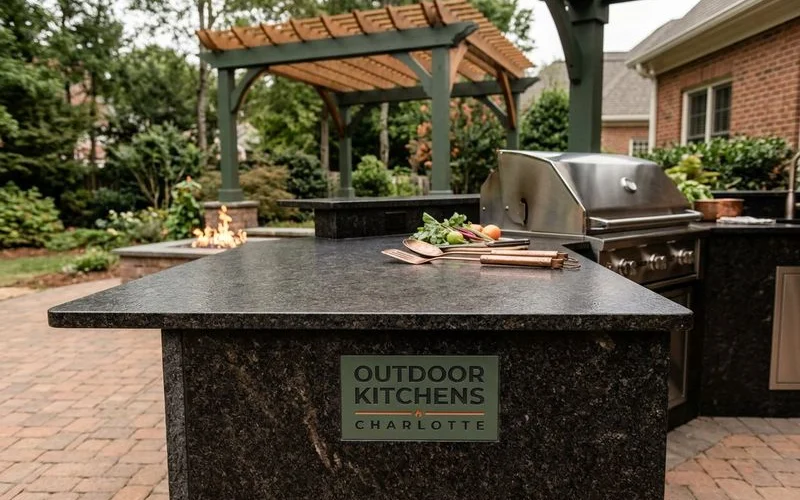
Our crews have seen clients place hot grill pans directly on the surface without causing any damage. The stone handles the sudden temperature spike beautifully.
Key advantages of choosing granite:
- High heat tolerance up to 1,200 degrees Fahrenheit.
- Excellent moisture resistance when properly sealed.
- Long-lasting value despite a higher initial cost.
Charlotte receives an average of 43 inches of rain per year. We strongly suggest applying a professional-grade penetrating sealer to repel this moisture. A properly sealed slab only needs resealing every one to two years. The cost of granite countertops typically ranges from $60 to $150 per square foot installed in the US.
Our clients often choose colors like Uba Tuba or Santa Cecilia to complement warm outdoor earth tones. The primary drawback of this material is its massive weight.
“Engineering the base structure correctly is just as important as selecting the stone itself.”
Large slabs require substantial structural support beneath them. We always advise working with an experienced stone masonry outdoor kitchen builder to engineer this support correctly. A solid foundation prevents the heavy stone from shifting over time. Proper engineering guarantees your investment will last for decades.
Natural Stone: Timeless Beauty with Character
We love the rustic, organic aesthetic that natural stone provides. Materials like soapstone, quartzite, and slate pair beautifully with lush landscapes. Each slab is entirely unique with distinct veining and texture.
The Benefits of Soapstone
Our installers appreciate soapstone because it is naturally non-porous. Unlike granite, this dense material does not require any chemical sealing. It is highly resistant to acids, so spilled citrus juice or wine will not etch the surface.
We remind clients that soapstone is slightly softer than granite. It will develop a natural, dark patina over time. Many homeowners find this aged look highly desirable.
The Power of Quartzite
Our preferred premium option is often quartzite. This natural stone offers the extreme hardness of granite with unique crystalline patterns. Quartzite measures an impressive 7 to 8 on the Mohs Hardness Scale, making it highly scratch-resistant.
We frequently see prices range from $70 to $200 per square foot installed in the US market. It handles seasonal temperature swings beautifully. You must apply a quality sealer periodically to protect the surface from moisture.
The Practicality of Slate
We often suggest slate as a more budget-friendly natural stone option. Installed costs typically fall between $50 and $100 per square foot. Its naturally textured surface provides excellent grip even when wet.
Our teams take extra care during installation because slate is prone to chipping along the edges. Careful handling ensures a clean, professional finish. This material remains a practical choice for outdoor prep areas.
Concrete: Modern Style with Endless Customization
We have noticed a massive surge in the popularity of concrete countertops. Homeowners seeking a contemporary or industrial aesthetic frequently request this versatile material. Concrete can be formed into any shape and tinted to virtually any shade.
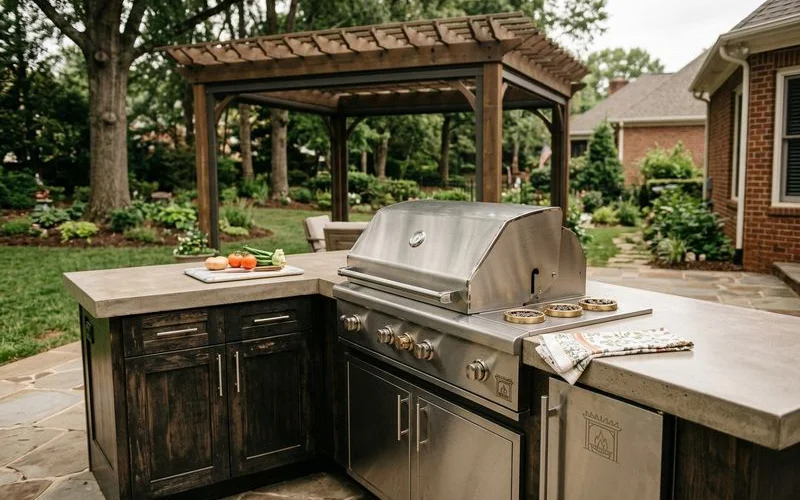
Our concrete specialists often utilize Glass Fiber Reinforced Concrete, or GFRC, for exterior projects. Industry testing shows that adding glass fibers increases the tensile strength of the concrete and reduces the total weight by up to 75 percent. This modern technique significantly minimizes the risk of hairline cracks from temperature fluctuations.
Leading benefits of GFRC concrete:
- Endless customization with integral colors.
- Reduced installation weight with GFRC technology.
- Seamless pouring for large outdoor islands.
We strongly emphasize the importance of professional sealing for any concrete surface. Concrete is highly porous and absorbs moisture readily without proper protection.
“Without a commercial-grade penetrating sealer, humid weather will quickly damage raw concrete.”
Unsealed concrete will quickly develop dark water spots or white mineral deposits. Our pricing for poured-in-place concrete starts around $65 per square foot. Highly customized precast slabs with embedded aggregates can reach $150 or more per square foot. Despite the necessary maintenance, it remains a top choice for custom designs.
Tile: Budget-Friendly with Design Flexibility
We consider tile countertops to be the most budget-friendly option available. Installed costs start as low as $20 per square foot for basic porcelain tile. Premium natural stone tiles can reach up to $75 per square foot.
Our top recommendation for outdoor tile is always porcelain rather than ceramic. According to the ANSI A137.1 industry standard, porcelain must have a water absorption rate of 0.5 percent or less to qualify as impervious. This extremely low absorption rate prevents freeze-thaw damage and mold growth.
Why porcelain excels outdoors:
- Impervious water absorption rating.
- Budget-friendly installation costs.
- Easy to replace individual damaged tiles.
We always caution clients about the vulnerability of standard grout lines. Porous grout is prone to staining and cracking in humid outdoor environments. Using a high-quality product like Litokol Starlike epoxy grout dramatically improves durability.
Our installation teams prefer epoxy grout because it resists moisture and requires zero sealing. Tile surfaces do lack the seamless appearance of solid stone slabs. They provide excellent value and are incredibly easy to repair if a single piece cracks.
How Charlotte Weather Affects Your Decision
We always factor the local climate into every material recommendation. Charlotte sits in USDA Hardiness Zone 7b/8a, featuring hot, humid summers and occasional freezing winters. These environmental conditions create specific challenges that require careful planning.
“Choosing a material that survives the 50 to 60 annual freeze-thaw cycles is the secret to a long-lasting outdoor kitchen.”
Our area averages 217 sunny days per year, making UV exposure a significant concern. Prolonged sunlight can cause color fading in some concrete pigments and tile glazes. Granite and natural stone are highly UV-resistant by nature.
We track the rapid temperature changes that typically occur each winter. This repeated expansion and contraction is particularly hard on porous materials.
List of local climate challenges:
- 43 inches of average annual rainfall.
- 217 days of direct sun and UV exposure.
- 50 to 60 winter freeze-thaw cycles.
Moisture that penetrates unsealed concrete will freeze, expand, and cause structural cracking. Our team suggests working with a local stone masonry specialist to handle these regional conditions. A local expert understands exactly which materials hold up best over time. Proper installation ensures your outdoor kitchen survives the toughest weather.
Making the Right Choice: Best Outdoor Kitchen Countertop Materials: Granite vs Stone vs Concrete
We know that selecting the perfect countertop requires balancing your budget and maintenance preferences. Every material offers a unique set of benefits and potential drawbacks. Your final decision should align with how frequently you plan to cook and entertain.
Our top pick for maximum durability and heat resistance remains granite. Soapstone provides a beautiful, low-maintenance natural aesthetic. Concrete delivers unparalleled creative possibilities for modern designs.
| Material | Heat Resistance | Durability Profile | Estimated Cost |
|---|---|---|---|
| Granite | Up to 1,200°F | Very High | $60 - $150 / sq ft |
| Quartzite | High | Mohs Scale 7-8 | $70 - $200 / sq ft |
| GFRC Concrete | High | Excellent Tensile Strength | $65 - $150+ / sq ft |
| Porcelain Tile | High | Impervious (≤0.5% absorption) | $20 - $75 / sq ft |
We encourage budget-conscious homeowners to explore the durability of porcelain tile. When evaluating the best outdoor kitchen countertop materials: granite vs stone vs concrete, keep in mind that a solid foundation is critical. Consult with experienced professionals who specialize in stone masonry outdoor kitchens to guarantee a flawless finish.
Michael Carter
Outdoor Living Design Specialist
15+ years designing outdoor kitchens across Charlotte, NC.