Do You Need a Permit to Build an Outdoor Kitchen in Charlotte?
Everything Charlotte homeowners need to know about building permits for outdoor kitchens. Mecklenburg County requirements, costs, and how to apply.
Michael Carter
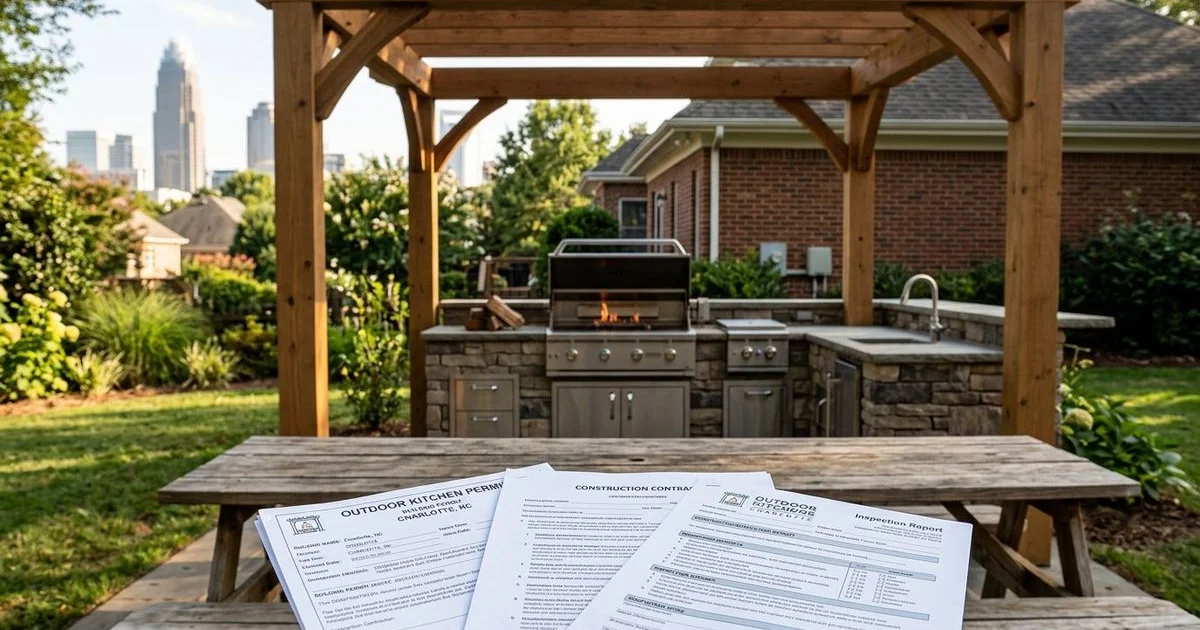
We often hear clients ask, “Do You Need a Permit to Build an Outdoor Kitchen in Charlotte?” right after finalizing their beautiful backyard designs. The dividing line between a standard patio grill and a high-end culinary space usually comes down to county paperwork. Our professional service team has handled hundreds of these applications across the metro area. As leading outdoor kitchen experts in Charlotte, we make navigating permits a seamless part of every project.
Missing a critical sign-off will quickly derail your timeline and budget.
We are going to break down exactly which outdoor upgrades trigger a Mecklenburg County review. Let’s look at the actual data, what these codes mean for your property, and how to get your application approved without frustrating delays.
When Do You Need a Permit to Build an Outdoor Kitchen in Charlotte?
Our clients frequently ask if a simple stone island requires official approval. Mecklenburg County and the City of Charlotte follow the North Carolina State Building Code for all residential construction. You must secure a permit for any accessory structure exceeding 12 feet in any dimension or any project involving utility connections.
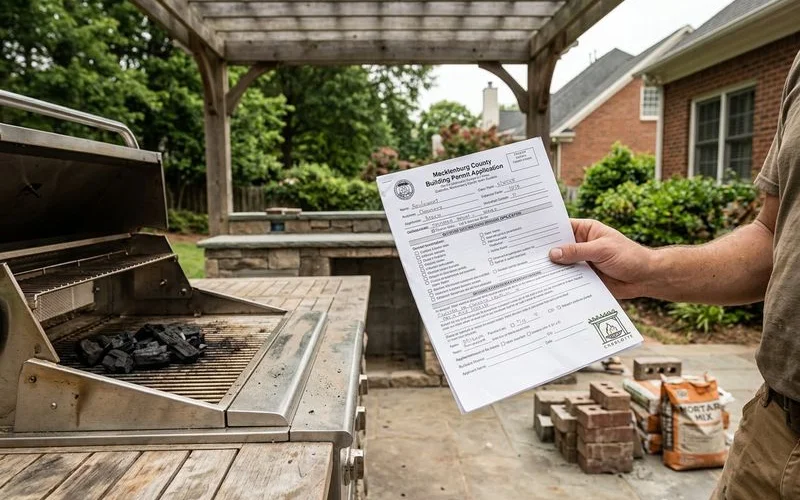
We always verify current guidelines through the Land Use and Environmental Services Agency (LUESA) before breaking ground. A freestanding charcoal grill sitting on your existing concrete pad does not trigger a review. Placing permanent masonry countertops, tying into a natural gas line, or erecting a timber pavilion will place you firmly in regulated territory. Our advice is to assume documentation is required until a code enforcement official confirms otherwise.
Types of Permits You May Need
We manage multiple application types depending on the exact features included in a custom backyard design. Each utility and structural element falls under a separate inspection process. You will face distinct requirements for every trade involved in the build.
| Permit Type | Typical Trigger Feature | Required Professional in NC |
|---|---|---|
| Building | Structures over 12ft, footings, roofs | General Contractor (if >$30k) |
| Mechanical | Gas lines, fire pits, built-in grills | Licensed Mechanical Contractor |
| Plumbing | Outdoor sinks, ice makers, drains | Licensed Plumber |
| Electrical | Outlets, task lighting, refrigerators | Licensed Electrician |
Building and Structural Permits
Our builders pull this primary document for the core physical elements of your project. This covers masonry work, concrete footings, retaining walls, and overhead structures like pergolas. A pavilion attached directly to your home counts as a residential addition and demands detailed structural plans.
Mechanical and Gas Permits
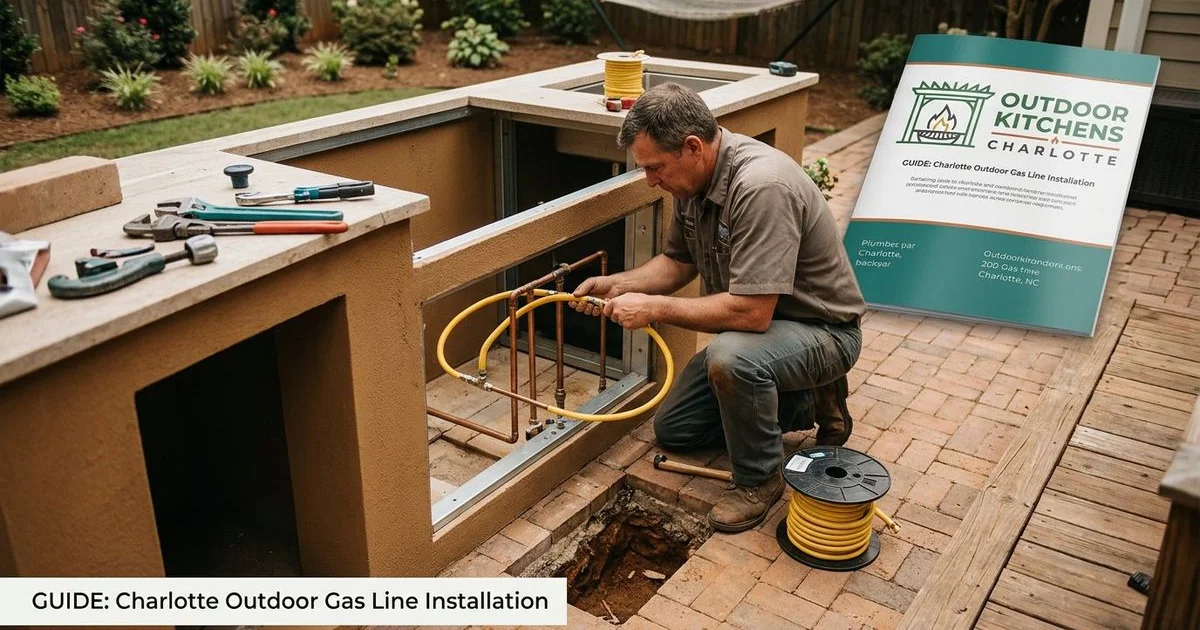
We rely on licensed mechanical contractors to safely run fuel lines to outdoor appliances. North Carolina law mandates that a certified professional must perform this specific installation. Inspectors will verify the integrity of the piping from your main supply to the specific grill or fire pit before you can turn on the fuel.
Plumbing Permits
Our designs often incorporate functional sinks and ice makers for convenience. A licensed plumber must handle the water supply lines and proper drainage systems to comply with health codes. Connecting to the municipal sewer or an approved greywater system requires its own specific sign-off.
Electrical Permits
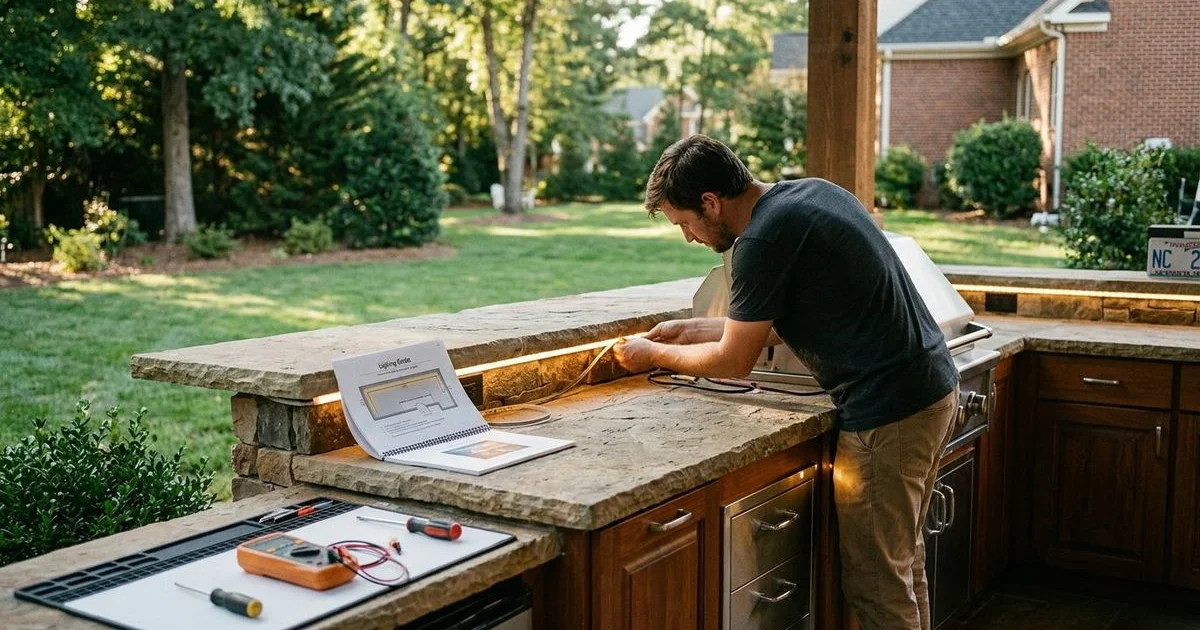
We install GFCI outlets, task lighting, and dedicated circuits to power refrigerators and rotisseries. All exterior wiring must meet the National Electrical Code standards for wet and damp locations. An inspector will verify all conduits and weather-proof boxes before the system goes live.
How to Submit Your Application in Mecklenburg County
Our permit specialists submit all residential project files through the county’s digital portal. Mecklenburg County transitioned entirely to Accela Citizen Access (ACA) after phasing out the legacy POSSE Outrider system in April 2025. This centralized platform tracks your approval status in real-time.
We follow a strict, multi-step process to ensure fast approvals:
- Gather Documentation: Site plans must clearly show the location of the proposed structure relative to your property lines.
- Submit Technical Drawings: Construction plans need to list exact dimensions, materials, and a detailed scope of work.
- Process Payments: We handle the fee payments during the application submission step to prevent delays.
- Schedule Inspections: Passing a rough-in inspection is required before anyone can close up walls or pour concrete over utility trenches.
Our team knows that the county bases building permit costs on the total construction value, while adding a standard $50 technology fee. Mechanical, electrical, and plumbing permits typically range between one hundred and three hundred dollars each.
HOA and Neighborhood Restrictions
We regularly review community covenants before submitting anything to the county. Homeowners association rules frequently enforce stricter guidelines than the municipal building code. Violating your architectural review board standards can result in severe fines or mandatory demolition of your new upgrades.
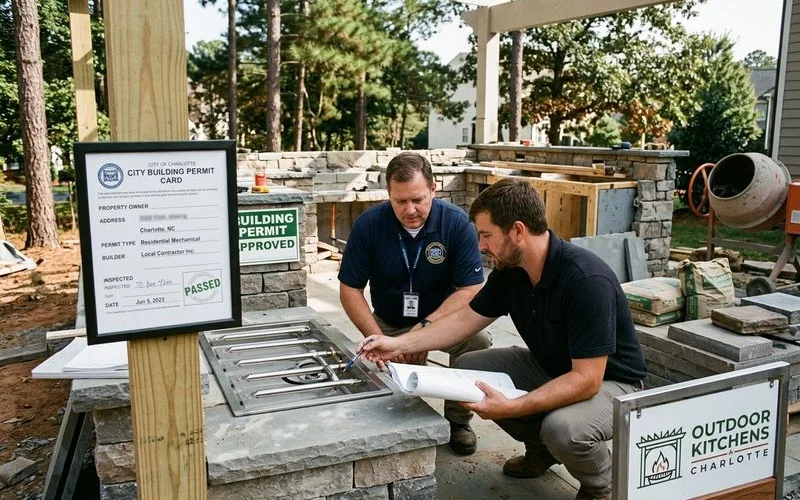
Many specific communities in Ballantyne, Lake Norman, and Fort Mill require a formal approval process. Setback requirements might dictate that a pavilion must sit twenty feet from a property line, even if the county only requires fifteen. Color palettes, roofing materials, and maximum structure heights must typically match the existing primary residence perfectly.
Our team submits comprehensive architectural review requests on behalf of clients to streamline this phase. Expect the HOA review period to take anywhere from thirty to sixty days depending on their board meeting schedule.
Penalties for Unpermitted Work in Charlotte
We strongly advise against skipping the official approval channels to save a few dollars. Mecklenburg County actively issues stop-work orders the moment they spot unauthorized construction. Code enforcement officers enforce strict penalties for bypassing the system.
Common consequences for unpermitted construction include:
- Zoning citations starting at $150 per violation.
- Mandatory payment of retroactive application fees.
- Forced demolition of non-compliant structures.
- Denied homeowner’s insurance claims following a fire or injury.
- Failed real estate transactions due to unapproved additions.
Our experts have seen unpermitted upgrades create massive headaches during future real estate transactions. A buyer’s inspector will quickly flag a permanent structure lacking documentation in the county database. Mortgage lenders frequently refuse to finance a property until all unpermitted work passes a retroactive inspection.
We must also warn you about the severe insurance risks involved. A fire caused by an illegal gas line or faulty wiring gives your homeowner’s insurance company grounds to deny a massive claim. Protecting your financial investment far outweighs the minor inconvenience of filing the proper paperwork.
Residential Setback and Zoning Considerations
We analyze local zoning maps to determine exactly where you can legally place a new structure. Charlotte’s Unified Development Ordinance, updated in 2023, dictates specific boundaries for accessory structures across different neighborhood classifications.
Most N1-A through N1-F residential zones require standard rear yard setbacks of fifteen to thirty feet. Side yard setbacks generally range from five to fifteen feet from the property line. Accessory structures exceeding twenty-four feet in height automatically trigger a strict fifteen-foot setback rule under current city ordinances.
Our designers account for utility easements during the initial planning phase. You cannot build permanent foundations over designated city water or sewer lines under any circumstances. Obtaining a fresh property survey is the safest way to identify these hidden boundaries before finalizing your layout.
Working With a Licensed Professional
We believe the smartest approach is hiring a company that manages the entire regulatory process internally. An experienced local contractor knows the inspectors, understands the Accela system, and stays updated on North Carolina Building Code changes.
Any residential project exceeding $30,000 in value requires a licensed North Carolina General Contractor by law. Verify this credential immediately when evaluating bids for a luxury backyard installation.
Our standard service includes pulling all necessary documents, paying the associated fees, and attending every on-site inspection. A reputable builder will never suggest ignoring code requirements to speed up a timeline. If someone tells you a hardwired masonry island does not need a permit, walk away immediately.
Get Expert Help With Your Charlotte Outdoor Kitchen
We take the stress out of building your perfect backyard retreat. So, do you need a permit to build an outdoor kitchen in Charlotte? Yes, and handling these local codes is simply part of delivering a high-quality product.
Our specialists coordinate directly with the county and your HOA so you can focus purely on selecting premium grills and stone finishes. Partnering with a skilled team ensures your new space is safe, legal, and built to last.
Ready to start designing your ideal backyard? Contact us today for professional outdoor kitchen installation in Charlotte and let us handle the paperwork.
Michael Carter
Outdoor Living Design Specialist
15+ years designing outdoor kitchens across Charlotte, NC.