Gas vs Charcoal Grill for Your Outdoor Kitchen: Which Is Right for You?
Gas or charcoal for your outdoor kitchen? Compare convenience, flavor, cost, and maintenance to find the best grill type for your Charlotte backyard.
Sarah Reynolds
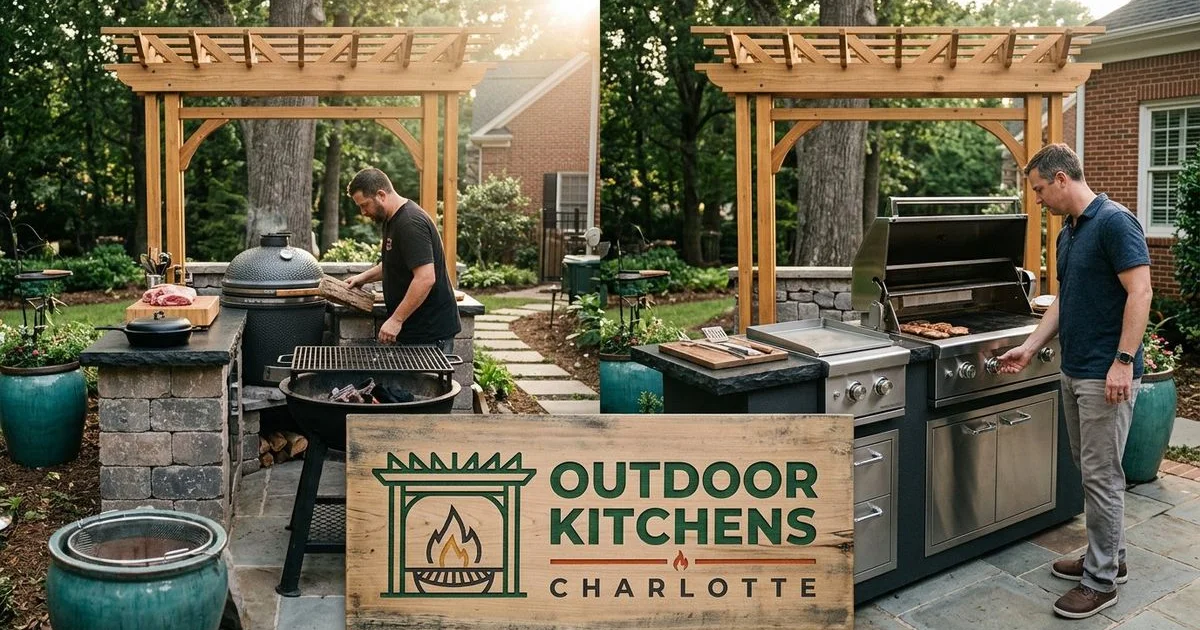
We hear the “Gas vs Charcoal Grill” question every single week from clients designing their dream outdoor kitchens.
It is a debate as old as backyard cooking itself, but the answer always comes down to how you actually intend to use the space.
Our team has installed hundreds of outdoor kitchens in Charlotte, and we have learned that neither option is universally perfect. You have to weigh convenience against that classic, smoky flavor profile. From what we have seen, understanding the daily trade-offs makes the final decision much easier.
Let’s break down the specific differences in performance, ongoing costs, and maintenance to help you choose the right centerpiece for your home.
Convenience and Speed
This is where gas grills hold a clear and undeniable advantage for busy households. A premium built-in gas grill typically goes from cold to a 500-degree cooking temperature in just ten to fifteen minutes. You turn a knob, press the igniter, close the lid, and walk away to prep your food.
Our clients love this plug-and-play simplicity for weeknight dinners. When the meal is done, cleaning up is as simple as turning the burners to high for five minutes to burn off residue, brushing the grates, and shutting it down. Total cleanup time barely registers on your schedule.
| Grill Type | Average Startup Time | Prep Required |
|---|---|---|
| Built-In Gas | 10-15 Minutes | Turn knob and press igniter |
| Charcoal Kamado | 20-30 Minutes | Load coals and light chimney |
A charcoal grill requires a much more intentional startup process. You need to load the briquettes or lump charcoal, light it using a chimney starter or fire starter cubes, and wait twenty to thirty minutes for the coals to ash over.
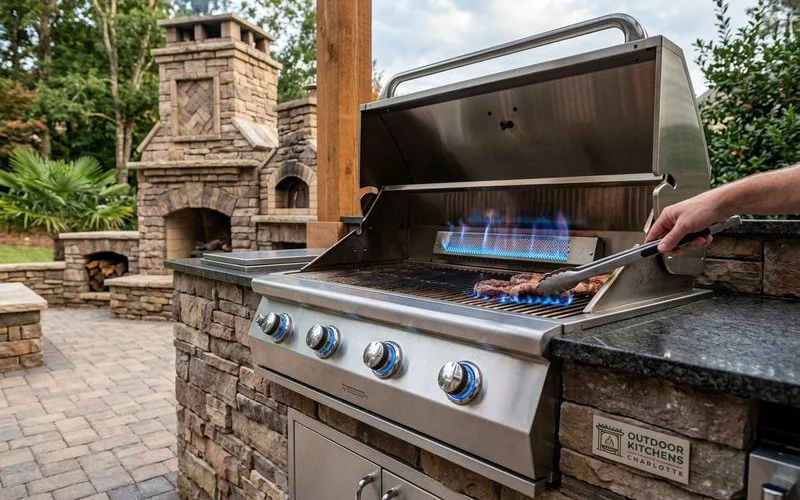
Adjusting the vents to dial in that precise temperature takes extra time and patience. Tuesday evenings run a lot smoother when dinner goes from fridge to table in under an hour. For homeowners who grill several times a week, the sheer speed of gas is tough to beat.
Charcoal cooking remains a rewarding activity, but it demands planning. It is perfectly suited for lazy weekends when you have the time to sit back and actively manage the fire.
Flavor Profile
This category is where charcoal earns its fiercely devoted following. The rich flavor produced by cooking over burning lump charcoal and wood is fundamentally different from gas combustion. The smoky, slightly sweet taste comes from organic compounds vaporizing when meat juices drip onto the hot coals.
Gas grills rely on a cleaner-burning fuel that primarily produces water vapor and carbon dioxide. Our culinary-focused clients note that gas-grilled food gets its flavor mainly from the Maillard reaction. This is the scientific term for the browning and caramelization that happens when proteins hit high heat.
“The Maillard reaction is responsible for the delicious crust on a gas-grilled steak, but you need natural wood or lump charcoal to achieve an authentic, deep smoke ring.”
While a gas-cooked steak is undeniably delicious, it lacks the aggressive, distinctive smoke character of a charcoal cook. Ceramic kamado-style cookers take this smoke flavor to an entirely different level. The insulated ceramic walls, found in models like the Big Green Egg, create an environment where smoke continually circulates around the food.
You get deep, complex flavors that standard gas burners simply cannot replicate. However, modern gas grill manufacturers are closing the gap by including dedicated smoker boxes or integrated wood chip trays.
- Hickory: Provides a strong, traditional bacon-like flavor.
- Applewood: Delivers a mild, sweet smoke perfect for poultry.
- Mesquite: Burns fast and hot with an intense, earthy taste.
Adding soaked chips provides a noticeable smoke infusion. Purists will still argue it is not identical to a pure charcoal fire, but it offers a fantastic middle ground for everyday cooks.
Temperature Control and Versatility
Gas grills offer precise, repeatable temperature control that feels as familiar as your indoor kitchen stove. Each burner features its own control valve, allowing you to establish distinct heat zones across the grates. You can sear a thick ribeye over high heat on the left while gently warming asparagus on the right.
Our installation crews often recommend gas units with at least 8,000 to 12,000 BTUs per burner for optimal searing capability. Temperature adjustments are instantaneous, letting you fine-tune the environment throughout the entire cooking process.
- Instant heat adjustments via individual burner valves.
- Ability to create distinct hot and cool cooking zones.
- Consistent ambient temperature for reliable baking.
Charcoal grills dictate temperature entirely through oxygen airflow management. Opening the bottom draft door and the top vent increases oxygen, which significantly raises the internal heat.
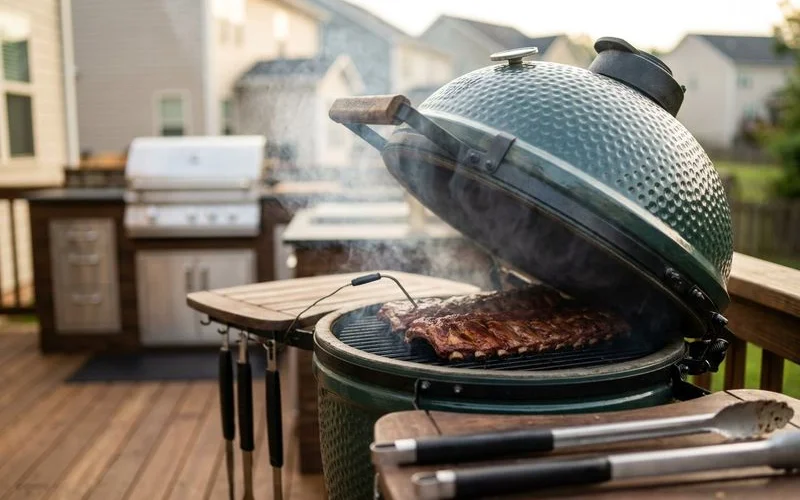
Closing those vents chokes the fire and lowers the temperature. Once you learn the system, a quality kamado cooker becomes remarkably precise and stable.
Low and Slow Barbecue Mastery
Where charcoal absolutely dominates is in its sheer temperature range. A large Big Green Egg, which features 262 square inches of cooking space, can comfortably hold a steady 150 degrees for cold smoking cheeses. It can also rocket past 800 degrees for authentic Neapolitan-style pizzas.
Most standard gas grills max out around 500 to 550 degrees. If extreme high-heat searing or baking is on your menu, charcoal provides the necessary firepower.
| Cooking Method | Ideal Temperature Range | Best Grill Match |
|---|---|---|
| Cold Smoking | 150°F - 200°F | Charcoal Kamado |
| Standard Grilling | 350°F - 450°F | Gas or Charcoal |
| Pizza Baking | 600°F - 800°F+ | Charcoal Kamado |
Charcoal cookers are also the undisputed champions of low-and-slow barbecue. Maintaining a steady 225 degrees for a fourteen-hour brisket smoke is a kamado’s specialty.
Gas grills can technically operate at lower temperatures, but holding that consistent, gentle heat all day requires constant supervision. A charcoal unit’s thick ceramic walls retain heat so efficiently that you rarely need to adjust the vents once the fire settles.
Cost Comparison
The upfront investment for built-in grills varies widely based on the brand, materials, and size you select. In general, premium gas and charcoal options sit at similar price points for the core unit itself. A durable, built-in gas grill for an outdoor kitchen typically runs between $1,500 and $4,000.
Our team frequently installs the Large Big Green Egg, which usually costs between $1,200 and $2,500 depending on the integrated nest and accessories. The ongoing fuel costs, however, paint a very different picture over time.
| Expense Category | Built-In Gas Grill | Charcoal Kamado |
|---|---|---|
| Average Unit Cost | $1,500 - $4,000 | $1,200 - $2,500 |
| Utility Installation | $800 - $3,000 (Gas Line) | $0 (No Hookups) |
| Estimated Cost Per Cook | Under $1.00 | $5.00 - $8.00 |
Natural gas is remarkably inexpensive, often adding just a few dollars to your monthly utility bill even with heavy usage. Propane tanks are slightly more expensive, costing roughly $20 to $30 per refill at most hardware stores. Each standard twenty-pound tank yields about fifteen to twenty hours of cook time.
Fuel and Installation Variables
Premium natural lump charcoal for a kamado cooker averages $20 to $30 for a large bag. That supply generally lasts for four to six sessions, meaning you should budget about $5 to $8 per cook. This makes charcoal noticeably more expensive than natural gas on a per-meal basis.
We always remind clients to factor in the infrastructure requirements before making a final choice. A built-in natural gas grill requires a dedicated, permitted gas line run directly from your home’s meter.
- Distance from the main gas meter to the island.
- Obstacles like existing concrete patios or mature tree roots.
- Local municipal permitting and inspection fees.
Trenching and installing a new natural gas line typically costs between $800 and $3,000 across the US, depending on the distance and complexity of the route. A charcoal kamado needs absolutely no utility connections, which offsets its higher daily fuel costs during that first year of ownership.
Maintenance and Longevity
Gas grills contain numerous mechanical components that will eventually wear out from intense heat and weather exposure. Burner tubes, ignition modules, gas valves, regulators, and heat distribution plates all have finite lifespans. Industry data shows that a well-maintained gas grill typically lasts between 5 and 15 years.
Our service technicians note that battery-powered igniters often need replacing every three to five years. Fortunately, replacement parts for major brands are widely available and relatively easy to swap out.
- Burner Tubes: Often last 5 to 10 years before rusting requires replacement.
- Ignition Modules: Typically require a fresh swap every 3 to 5 years.
- Heat Tents: Need to be replaced when heavy corrosion or warping appears.
Charcoal grills, especially heavy-duty ceramic kamado cookers, feature virtually no mechanical parts to break down. The thick ceramic body is essentially indestructible under normal backyard conditions. A properly cared-for kamado can easily last 20 years or more, often becoming a generational hand-me-down.
Routine Upkeep Requirements
The maintenance on a kamado is incredibly minimal and affordable. You will occasionally need to replace the felt gasket seal around the lid, and the internal cast-iron fire grate may eventually warp, but these are cheap, five-minute fixes.
Both fuel types demand consistent cleaning to perform safely and efficiently. Gas models require brushing the grates after every use, plus a deep clean of the burner tubes and grease drip trays twice a season to prevent dangerous flare-ups.
Charcoal units simply require scooping out the accumulated ash after every few cooks. You should also run a shop vacuum through the lower chamber a few times a year to remove fine dust buildup.
The Climate Factor
Your local climate plays a surprisingly large role in the daily reality of the gas versus charcoal decision. During sweltering summer months with temperatures in the mid-nineties, standing over a roaring charcoal fire is physically draining. Firing up a gas grill and stepping back into the shade is vastly more comfortable.
Our clients in regions with mild winters find that kamado cookers absolutely shine during the colder months. The heavy ceramic insulation locks in the heat, allowing you to smoke a pork shoulder efficiently even when there is snow on the ground.
“Ceramic kamados excel in freezing temperatures because the heavy insulation prevents cold air from rapidly dropping the internal cooking temperature.”
Heavy rain and unexpected thunderstorms present a major challenge for charcoal purists. While a gas unit will keep cooking right through a light drizzle, trying to light and manage wet charcoal in the wind is a miserable experience.
If your outdoor kitchen design includes a solid roof structure, weather becomes a non-issue. If your cooking zone is fully exposed to the elements, gas provides a much more reliable, all-weather cooking solution.
Why Not Both?
Many premium outdoor kitchens intentionally incorporate both a gas grill and a charcoal kamado. The gas unit easily handles the quick weeknight burgers, hot dogs, and large-volume party prep. The kamado is then reserved for weekend brisket smokes, high-heat pizza nights, and specialized culinary projects.
We strongly advocate for this dual-fuel approach if your patio footprint and budget allow for it. A custom built-in grill island can be perfectly designed to house both a high-BTU gas head and a recessed kamado table.
- Gas handles weeknight meals and high-volume hosting effortlessly.
- Charcoal tackles weekend smoking and high-heat baking perfectly.
- Dual setups maximize the overall functionality of your outdoor prep space.
This creates the ideal, zero-compromise cooking station. Our design team can help you map out a floor plan that provides proper spacing, safe ventilation, and dedicated prep counters for both appliances. You truly get the absolute best of both grilling worlds.
Conclusion
The choice between a gas vs charcoal grill always comes down to your personal cooking style and available time.
Both systems offer incredible benefits for any outdoor kitchen setup.
Our team recommends starting by evaluating your typical weekly routine and deciding if convenience or traditional flavor holds more value for your household.
If you are ready to start planning your ideal backyard cooking station, reach out to our design specialists today to schedule a consultation.
Sarah Reynolds
Content Editor & Outdoor Living Enthusiast
Charlotte-based home improvement writer specializing in outdoor living.