Gas vs Wood-Burning Fire Pit: Pros, Cons, and Costs
Should you choose a gas or wood-burning fire pit for your Charlotte backyard? Compare convenience, cost, ambiance, and maintenance requirements.
Sarah Reynolds
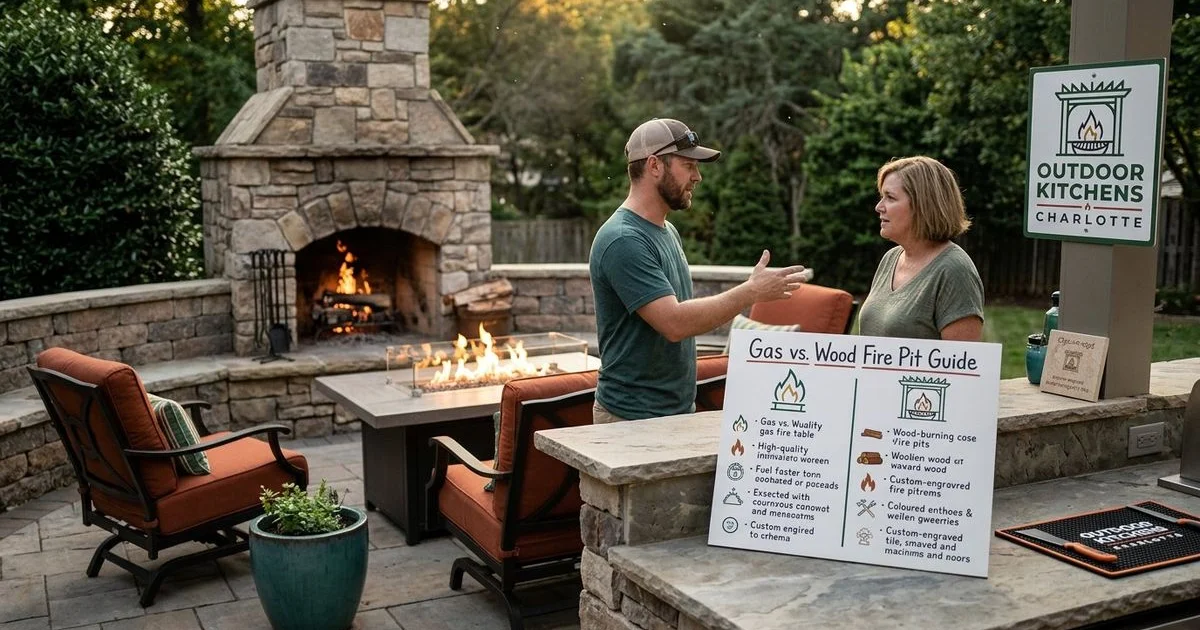
We hear the same debate from Charlotte property owners every single season. When deciding on a Gas vs Wood-Burning Fire Pit: Pros, Cons, and Costs are the exact factors that dictate how often your patio gets used.
This fuel decision dictates both your long-term maintenance costs and your immediate evening experience. As specialists in outdoor kitchens in Charlotte, we help homeowners make this choice every week.
Our team will break down the exact performance differences using current 2026 data. You will see the actual operating costs, what local burn bans mean for your property, and which setup makes the most sense.
The Gas Fire Pit Experience
We consistently recommend gas fire pits for clients who prioritize instant gratification. These units run on either natural gas connected directly to a home line or propane from a portable tank. They ignite instantly with a switch and produce a consistent flame that requires zero tending.
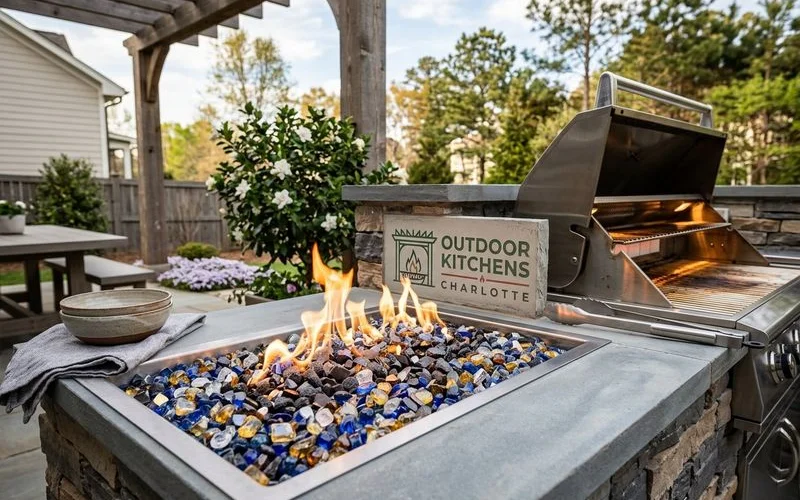
Our preferred installations often feature high-performance burners like the Warming Trends Crossfire brass burner. This engineered brass jet system mixes oxygen at the base to produce up to 450,000 BTUs. The resulting heat output rivals a traditional campfire without the mess.
“Modern brass jet burners provide a venturi effect that maximizes flame height while using less fuel than older punched-steel tubes.”
We love the clean operation that gas units provide. There is no smoke to dodge or ash to sweep up after an evening outside. For Charlotte neighborhoods with houses built close together, this absence of smoke eliminates neighbor complaints completely.
Modern Convenience and Control
Our gas installations allow you to adjust the flame height to match the season. You can run the fire pit on low during a mild October evening and crank it up when January temperatures drop below freezing. Most premium gas fire pit burners, such as the HPC Fire Torpedo, produce between 40,000 and 100,000 BTUs easily.
This level of controllability is a massive advantage in our variable North Carolina climate. We see a huge demand for modern, polished aesthetics in outdoor kitchens. You can replace natural wood with fire glass, lava rock, or ceramic logs to match a contemporary design.
Fire glass options in blue, bronze, or clear mixtures sparkle beautifully as the gas flames dance through them. Here is a quick breakdown of popular gas burner styles:
- Linear Burners: Ideal for narrow rectangular pits and creating a sleek wall of fire.
- Penta Burners: Star-shaped designs that promote an even natural-looking campfire shape.
- Tree Style Burners: Provide multi-dimensional dense flames for large square or round pits.
- H-Style Burners: Great for wider openings where you want the flame spread out.
The Wood-Burning Fire Pit Experience
We understand that gas simply cannot replicate the primal experience of a real wood fire. The crackling sounds and the scent of burning logs create an atmosphere that connects people to the outdoors.
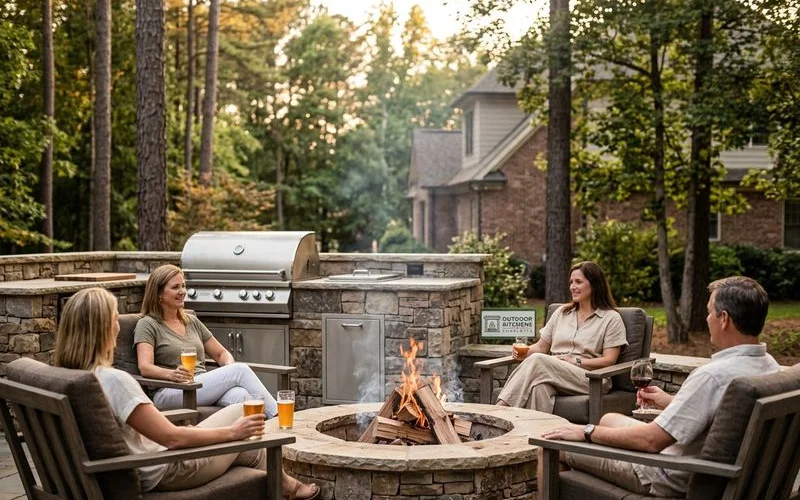
Building and tending a wood fire is a cherished ritual for many local families. Selecting the right wood and coaxing the flame to life encourages everyone to put down their phones.
Our clients often use these pits to teach their children how to safely manage a fire. This creates a meaningful life skill and an excellent bonding experience on a Friday night.
Heat Output and Authentic Cooking
We source dense hardwoods like oak, hickory, and cherry because they produce incredible heat. A well-fed wood fire easily generates 100,000 to 200,000 BTUs to keep large groups warm during cold winter nights.
These pits also offer the distinct advantage of outdoor cooking capability. You can roast marshmallows, grill sausages on skewers, or cook in cast-iron pans directly over the wood coals.
Our teams frequently hear about the challenges of starting fires during humid Charlotte summers. Wood absorbs moisture quickly in this climate.
Pro Tip: Skip the crumpled newspaper and use kiln-dried wax sawdust starters like “Pixie Dust” to ignite reluctant seasoned wood instantly.
Smoke remains the primary complaint with traditional setups. It irritates eyes, permeates clothing, and requires a full ash cleanup after every single use. You must also ensure embers are completely extinguished before heading inside for the night.
Gas vs Wood-Burning Fire Pit: Pros, Cons, and Costs in Charlotte
We track local material and labor pricing closely to give our clients accurate estimates. The financial comparison involves both the initial installation and the ongoing operating expenses.
Our recent 2026 project data highlights the following average upfront installation costs:
- Portable Wood Bowls: Start around $200 for basic steel models.
- Custom Built-In Wood: Range from $1,500 to $4,000, while high-end structures reach $10,000.
- Propane Gas Setups: Cost between $2,000 and $5,000 without permanent utility lines.
- Natural Gas Built-Ins: Average $3,000 to $8,000 with professional line trenching.
Built-in gas units demand a higher upfront investment due to the specialized burner systems. Premium gas installations featuring electronic ignition and remote control often reach $10,000 to $15,000.
Operating Expenses
Our analysis shows that operating costs favor gas over the long run. The price of local firewood has fluctuated recently, but a standard cord provides roughly 20 to 30 fires.
According to 2025 pricing from local suppliers like Wedges Firewood, a cord of mixed hardwood costs roughly $475 to $575. Premium kiln-dried hickory or oak can reach $850 per cord when delivered and dumped on site.
We calculate that natural gas costs approximately $1 to $2 per hour to operate a typical burner. Propane runs slightly higher at $2 to $4 per hour at current prices, with a standard 20-pound tank lasting 8 to 12 hours.
| Fuel Type | Initial Installation Cost (Avg.) | Ongoing Operating Cost |
|---|---|---|
| Portable Wood Bowl | $200 - $500 | $475 - $850 per cord |
| Custom Wood Built-In | $1,500 - $4,000 | $475 - $850 per cord |
| Propane (Portable Tank) | $2,000 - $5,000 | $2 - $4 per hour |
| Natural Gas Built-In | $3,000 - $8,000 | $1 - $2 per hour |
For clients using their feature once or twice a week from October through March, the annual cost difference is modest. Annual fuel expenses average $150 to $300 for natural gas, $300 to $500 for propane, and $300 to $600 for firewood.
Safety and Regulations in Charlotte
We constantly monitor the Mecklenburg County open burning regulations to keep our clients compliant. Wood-burning structures are classified as open burning and fall under strict county ordinances.
During periods of high fire danger, the county issues burn bans that prohibit wood-burning pit use entirely. A clear example occurred during the March and April 2025 dry spell when all recreational fires were strictly forbidden.
Our teams advise clients that even outside of burn bans, warming fires must be constantly attended. You must also keep a readily available water supply or fire extinguisher nearby.
“Violating a local burn ban carries a $100 fine plus $183 in court costs, and you could be held financially responsible for any fire department response.”
We strongly recommend gas units for homeowners living in densely developed neighborhoods or HOA communities. Gas systems do not produce airborne embers or combustible material smoke.
Local Code Compliance
This regulatory advantage means you can enjoy a propane or natural gas feature any day of the year without checking the burn ban status.
Regardless of your chosen fuel, Charlotte fire codes require you to position the structure at least 10 feet away from any house, overhanging vegetation, or property line.
Our installers secure a building permit for any built-in design with a permanent gas connection. Working with experienced outdoor fireplace and fire pit contractors ensures your installation meets all local codes perfectly.
Which Fire Pit Is Right for You?
We tell clients to choose gas if sheer convenience and a modern aesthetic are the top priorities. Gas is the clear winner for smoke-free evenings in tight HOA communities.
These clean-burning setups integrate seamlessly with an existing outdoor kitchen design.
Our designers recommend wood-burning features for families who value the authentic sensory ritual of building a real fire. Wood is ideal for larger lots where smoke is less of a concern and for those who cherish traditional campfire meals.
“The best solution to the fuel dilemma is installing both options on a single property to give you the absolute best of both worlds.”
You can place a sleek gas feature near the main patio for quick weeknight use while keeping a separate wood circle further back in the yard.
Our goal is to help you resolve the Gas vs Wood-Burning Fire Pit: Pros, Cons, and Costs debate so you can move forward confidently.
Consult with outdoor fire feature professionals today to explore structural designs that match your specific space and budget.
Sarah Reynolds
Content Editor & Outdoor Living Enthusiast
Charlotte-based home improvement writer specializing in outdoor living.