How to Cook Outdoors Year-Round in Charlotte, NC
Tips and solutions for year-round outdoor cooking in Charlotte. Covered kitchens, heaters, wind screens, and seasonal strategies for every month.
Sarah Reynolds
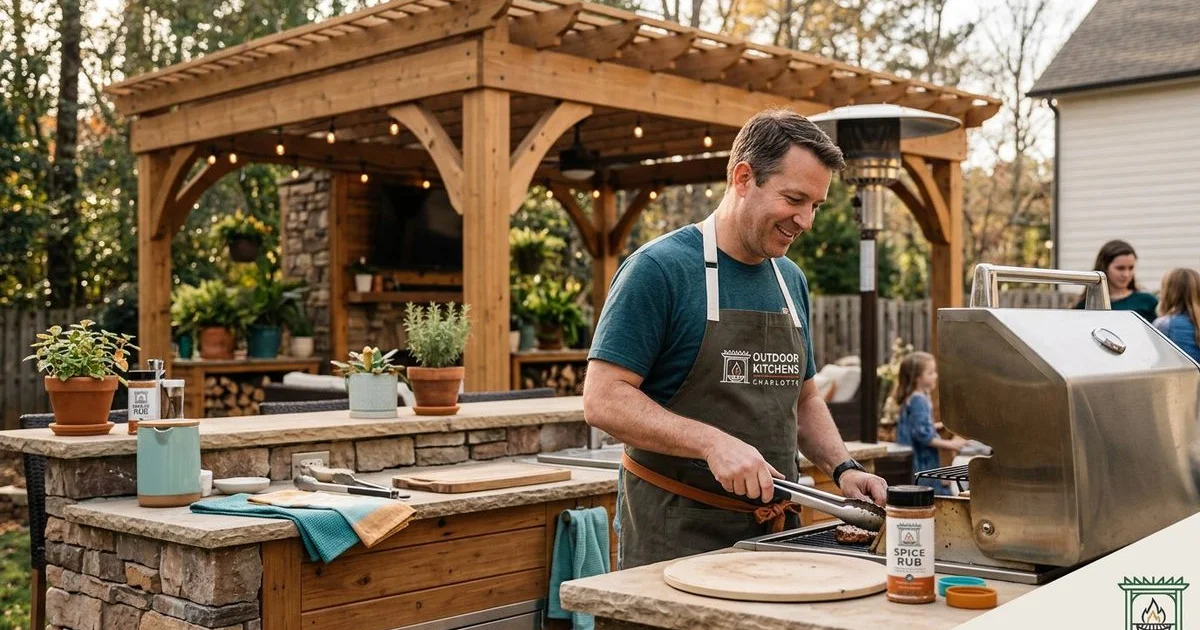
You know how frustrating it is to plan a weekend barbecue only to have a pop-up thunderstorm force everyone inside.
Figuring out how to cook outdoors year-round in Charlotte, NC, requires specific planning to handle our unique climate. As a professional service team, our crew spends every day building and updating these backyard spaces. The most common request we hear is how to make the patio usable in every single season.
Charlotte actually sits in a sweet spot for outdoor cooking enthusiasts. Our team builds outdoor kitchens in Charlotte designed to perform in every season. The moderate climate allows for grilling 365 days a year if you have the right structural defenses. Let’s look at the specific challenges of our local weather and walk through the exact additions needed to build a fully functional covered outdoor kitchen.
Understanding Charlotte’s Seasonal Cooking Challenges
Charlotte’s climate falls in USDA Hardiness Zone 7b/8a. This designation means mild winters, hot summers, and pleasant spring and fall shoulder seasons. Each season brings specific hurdles for outdoor cooks that require targeted solutions.
Spring and Summer Weather Patterns
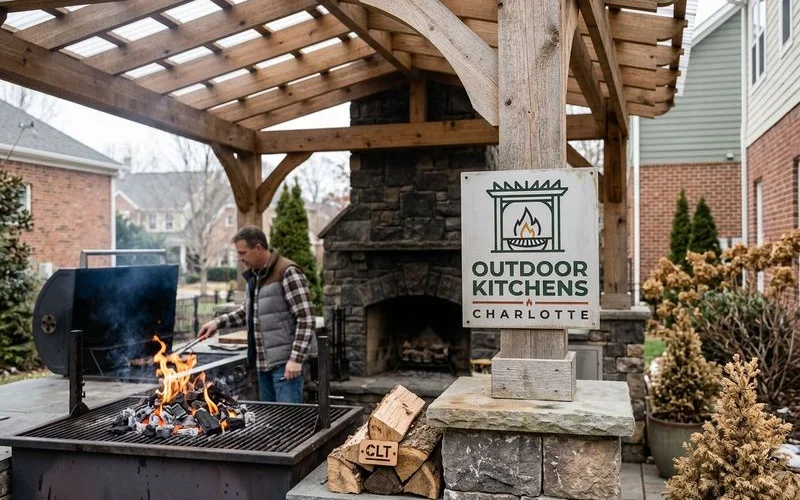
Spring in Charlotte from March through May is arguably the most pleasant outdoor cooking season. Temperatures range from the 60s to low 80s with moderate humidity. The main obstacle is spring rain, which averages around 3 inches per month. An afternoon shower will interrupt a perfectly planned cookout if your kitchen lacks overhead coverage.
Summer from June through August brings intense heat. Our team constantly sees homeowners retreat indoors because they lack proper shade structures. Average highs reach the low to mid-90s, but recent data from the National Weather Service for 2025 showed Charlotte experienced 53 days with temperatures of 90 degrees or above. This number sits well above the historical average of 44 days. Afternoon thunderstorms are almost a daily occurrence in July and August, meaning you must plan for sudden downpours.
Fall and Winter Considerations
Fall mirrors spring with comfortable temperatures and lower humidity. October is widely considered the ideal outdoor cooking month in Charlotte. Average highs hover in the mid-70s with minimal rainfall. Evening temperatures drop into the 40s by November, making supplemental heating necessary for after-dinner gatherings.
Winter is the mildest challenge for local residents. Average winter highs reach the 50s, while nighttime lows dip into the 30s. Charlotte averages only a few inches of snow per year, and freezing temperatures rarely persist for more than a few consecutive days. With proper coverage and a dedicated heat source, winter outdoor cooking is a genuinely enjoyable experience.
The Foundation: A Covered Outdoor Kitchen
A solid roof over your cooking area is the single most important investment for year-round utility. A covered outdoor kitchen eliminates rain and direct sun from the equation. It creates a protected space that functions reliably regardless of the forecast.
A pavilion-style cover with a standing seam metal roof provides excellent protection. This permanent structure blocks rain completely and creates a defined ceiling for installing fans and heaters. A structural roof with at least a 24-inch overhang directs rainwater away from the cooking area to keep your foundation dry.
If a full pavilion exceeds your current budget, a smart pergola offers a flexible alternative. Brands like StruXure manufacture aluminum pergolas with automated louvers. These motorized slats close tightly during a rainstorm to protect your grill and open up to vent smoke on clear days.
Our clients often ask about the financial return on these backyard structures. Local real estate data for 2025 and 2026 shows that high-quality outdoor kitchens in the Charlotte market yield a return on investment of 60% to 80%. A well-executed covered space directly increases your property value while expanding your livable square footage.
| Feature | Solid Roof Pavilion | Smart Pergola (e.g., StruXure) |
|---|---|---|
| Weather Protection | 100% rain and sun blockage | Adjustable louvers for rain or sun |
| Ventilation Needs | Requires strong exhaust hoods | Louvers open to vent grill smoke |
| Investment Level | Higher initial cost | Moderate to high cost |
Beating the Summer Heat
Charlotte summers push many home chefs inside. The right cooling strategies will keep your space comfortable even during a July heatwave. Ceiling fans are absolutely essential for survival from June to August.
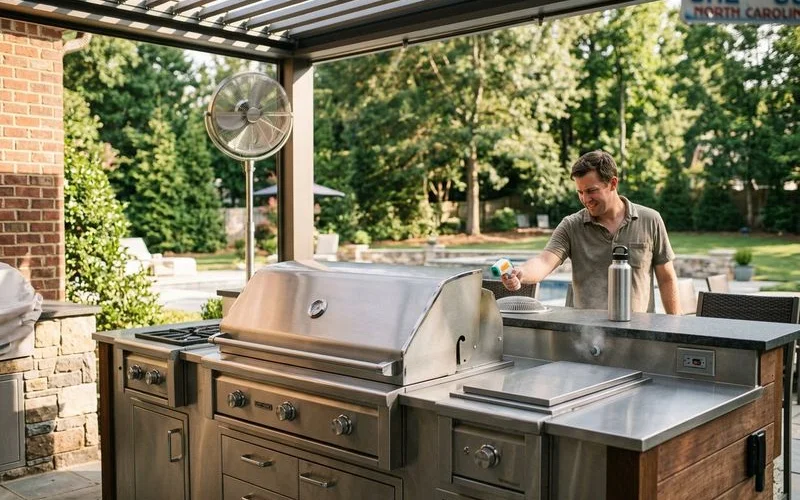
A covered outdoor kitchen needs a high-quality, UL-rated wet-location ceiling fan above the primary gathering area. Models like the Minka-Aire Xtreme H2O or the Hunter Dempsey 60-inch fan are specifically designed to move massive volumes of air outdoors. The air movement from a high-CFM ceiling fan reduces the perceived temperature by 8 to 10 degrees. You will notice the difference immediately on a 95-degree afternoon.
Misting systems provide extra cooling when fans alone fall short. High-pressure misting systems operating at 1000 PSI create a flash-evaporation mist. This specific pressure level cools the surrounding air by up to 20 degrees without leaving your countertops or guests wet.
Strategic landscaping also plays a massive role in temperature control. Here are a few reliable shade strategies for Charlotte properties:
- Plant Western Trees: Fast-growing shade trees like red maples and tulip poplars block the intense afternoon sun.
- Install UV Shades: Motorized solar shades block 90% of UV rays while letting air flow through.
- Shift Cooking Times: Plan your heaviest grilling for early morning or after 6 PM when the sun angle drops.
Staying Warm Through Charlotte Winters
Winter outdoor cooking is surprisingly comfortable with the right heating setup. You do not need industrial-grade heating for our mild Carolina winters. Just enough warmth to take the edge off keeps the cooking area pleasant.
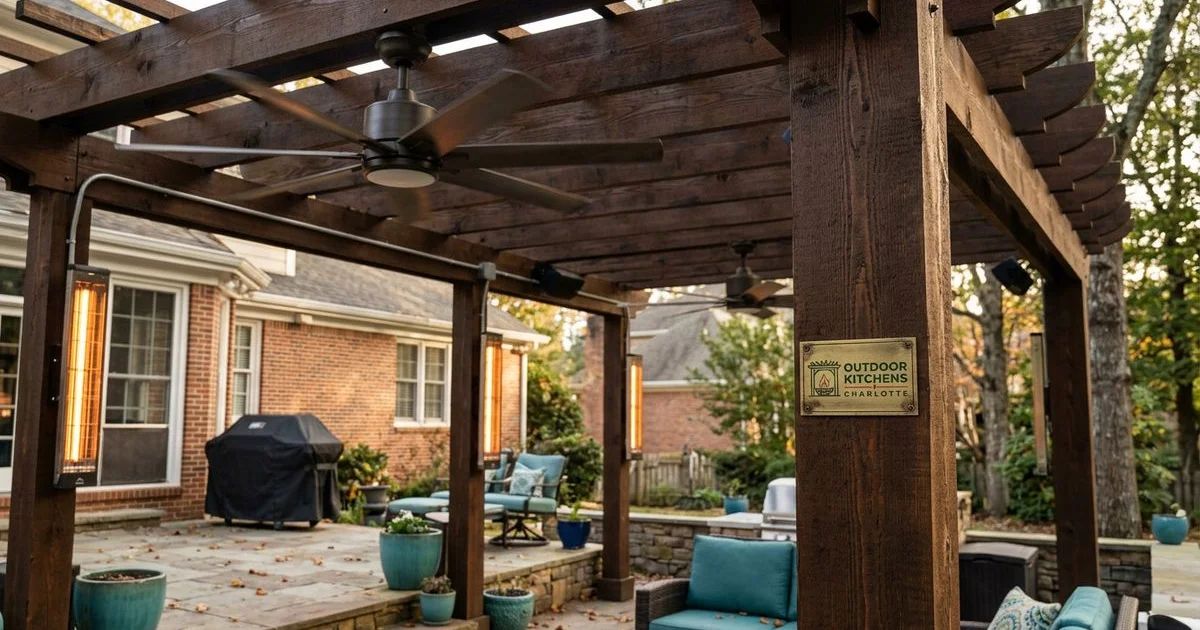
Ceiling-mounted infrared heaters are the most effective heating solution for covered patios. These heaters warm objects and people directly rather than blowing hot air into the open yard. A pair of 4000-watt infrared heaters keeps a 150-square-foot covered cooking area comfortable even when temperatures dip into the 30s.
When comparing premium electric patio heaters, two brands dominate the market for 2026:
- Infratech: Manufactured in the US from 304-grade stainless steel, these units are highly durable and boast up to 90% energy efficiency.
- Bromic: These heaters offer a very sleek modern design, but their distinctive grid face can block up to 30% of the radiant heat according to recent performance tests.
Freestanding propane patio heaters provide portable warmth. These mushroom-style heaters produce a cone of radiant heat covering an 8 to 10-foot radius. They are incredibly useful for keeping guests warm at adjacent dining tables that sit outside the covered pavilion.
Wind screens make a dramatic difference in winter comfort. Motorized retractable screens or clear vinyl curtains from brands like Sunesta block cold wind while maintaining your backyard view. On calm winter days in the 50s, a good windbreak might be the only warming tool you need.
Seasonal Maintenance for Year-Round Readiness
Keeping your outdoor kitchen ready for continuous use requires a simple seasonal maintenance routine. A consistent schedule prevents small issues from becoming expensive repairs.
Spring and Summer Prep
In spring, inspect your outdoor kitchen thoroughly after the winter months. Check gas connections for leaks and clean the burners. Our maintenance technicians recommend using Bar Keepers Friend to remove any superficial rust spots from stainless steel grill grates caused by winter moisture. Test all electrical components including your wet-rated lights and fans.
Before summer hits, focus heavily on your cooling systems. Clean the ceiling fan blades to ensure balanced spinning. Flush misting system nozzles with vinegar to remove hard water mineral buildup. Check your outdoor refrigerator and ice maker seals because these appliances work overtime during a hot Carolina summer.
Fall and Winter Prep
Fall maintenance prepares your kitchen for the cooler months ahead. Reseal natural stone countertops if water no longer beads up on the surface. Winterize exposed plumbing by shutting off the water supply line to your outdoor sink and ice maker to prevent frozen pipes during a January cold snap.
Winter maintenance requires very little effort if you complete your fall prep. Keep the cooking area clean and remove wet leaves or debris after storms. Periodically check that your infrared heaters are functioning properly before guests arrive. Cover unused appliances with fitted waterproof covers to protect them from moisture.
How to Cook Outdoors Year-Round in Charlotte, NC: Building Your Kitchen
Design decisions made at the beginning of a new project have the biggest impact on your year-round comfort. Start with a solid covered structure and plan electrical circuits specifically for high-draw appliances like electric infrared heaters. Include gas lines for cooking appliances and orient your kitchen to maximize natural wind protection.
Charlotte homeowners who invest in a well-designed covered outdoor kitchen consistently report a dramatic increase in outdoor cooking frequency. Many go from occasional weekend grilling to cooking multiple times per week in every single season. The combination of our moderate climate and a properly equipped space creates an outdoor living experience that rivals the indoor kitchen.
Learning how to cook outdoors year-round in Charlotte, NC, simply comes down to eliminating the weather barriers that keep you inside.
Those obstacles are entirely solvable with the right planning, specific heating and cooling products, and professional guidance. Schedule an assessment of your backyard space today to start designing a kitchen that works for you 365 days a year.
Sarah Reynolds
Content Editor & Outdoor Living Enthusiast
Charlotte-based home improvement writer specializing in outdoor living.