How to Seal Outdoor Kitchen Countertops for Charlotte Weather
Protect your outdoor kitchen countertops from Charlotte's heat, humidity, and rain. Step-by-step sealing guide for granite, stone, and concrete surfaces.
Sarah Reynolds
We see a lot of stunning patio setups quickly lose their appeal due to Charlotte’s harsh weather.
The constant cycle of intense heat and sudden downpours creates a hostile environment for porous surfaces. Water seeping into the stone causes structural weakening and stubborn stains.
Our team of outdoor kitchen experts in Charlotte knows that unsealed natural stone simply cannot survive 43.1 inches of annual rainfall without protection. Protecting that investment is your next logical step if you have recently installed high-quality stone masonry outdoor kitchens.
- Proper maintenance ensures your space looks pristine for years to come.
- We will break down exactly how to seal outdoor kitchen countertops for Charlotte weather to ensure you get professional results.
- Let’s look at the best products for the job and the specific steps required to protect your surfaces.
Preparing your surfaces properly makes a massive difference in the final outcome.
Why Sealing Matters in Charlotte’s Climate
Our experts constantly monitor how the subtropical climate attacks porous countertop materials. Summer humidity regularly exceeds 80 percent throughout the region. Constant moisture tries to penetrate your surfaces every single day during July and August.
We often find that this trapped water carries minerals and pollutants that cause deep discoloration over time. The freeze-thaw cycle adds another layer of concern during the colder months. Local weather data shows the city experiences around 59 nights a year that drop to or below freezing.
Our experience shows that water trapped inside porous stone expands when it freezes, creating tiny cracks. These microscopic fractures grow larger with each cycle and can eventually cause spalling. Severe neglect leads to complete structural failure in the most affected areas.
We constantly remind clients that the area averages 218 sunny days per year. Intense ultraviolet radiation degrades many surface treatments surprisingly fast.
- Frequent UV exposure breaks down the molecular bonds in standard sealers.
- A product that lasts three years indoors might only survive 12 to 18 months outside in North Carolina.
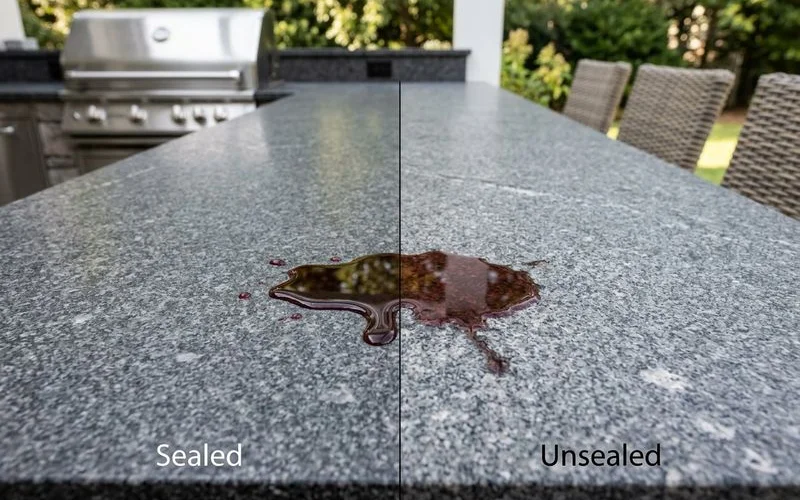
Our recommended sealing routine creates an invisible barrier that repels water and prevents UV degradation. Regular maintenance is a small effort that protects a significant financial investment.
Choosing the Right Sealer for Your Countertop Material
We strongly advise against using generic formulas, as using the wrong type can cause permanent damage. The market offers two main categories of countertop protection options. Penetrating and topical sealers function in completely different ways.
Penetrating vs. Topical Options
Our preferred choice for natural stone is a penetrating sealer. These impregnating formulas absorb into the stone and fill the pores from within. They do not change the appearance of the surface and allow it to breathe while repelling oil and water.
We find that penetrating options handle temperature fluctuations much better than topical alternatives. Topical sealers sit on the surface to create a visible, protective coating. They provide excellent stain protection but are highly susceptible to peeling or flaking in outdoor environments.
Best Products for Specific Materials
Our top recommendation for granite is a fluoropolymer-based penetrating sealer. Laticrete StoneTech BulletProof Sealer is a fantastic option that costs around $60 to $90 per quart. One quart covers up to 225 square feet for a single coat.
We also see excellent results with Tenax Hydrex and Miracle Sealants 511 Impregnator. Concrete countertops require a specialized two-step approach for maximum defense. Applying a penetrating layer first reduces porosity, while a topical acrylic or polyurethane layer provides extra surface protection.
Our teams know that concrete needs this double layer of defense due to its exceptionally high porosity.
| Sealer Type | Best Used For | Outdoor Durability |
|---|---|---|
| Penetrating (Impregnating) | Granite, Marble, Slate | High (Resists UV and temperature changes) |
| Topical (Coating) | Concrete (as a top coat) | Medium (Can peel or flake if used improperly) |
Understanding these differences helps you select the exact formulation your patio requires. Making the right choice prevents costly restoration work down the road.
How to Seal Outdoor Kitchen Countertops for Charlotte Weather
We recommend following these specific steps for a professional-quality seal that survives the toughest weather conditions.
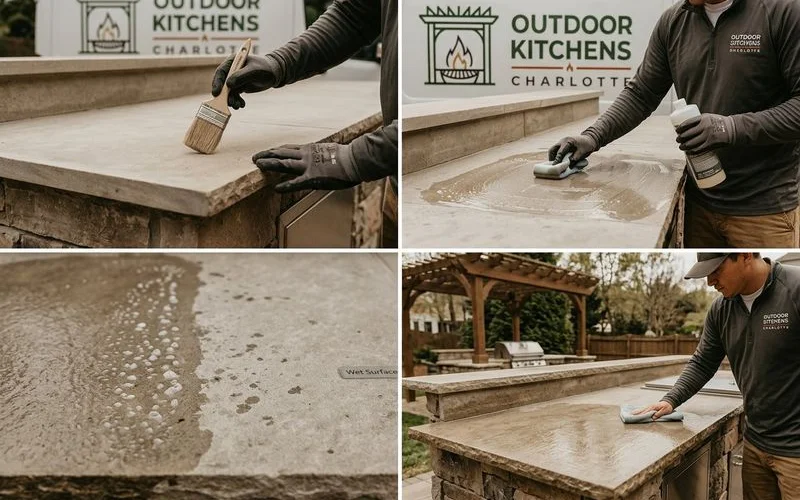
Start by thoroughly cleaning the countertop surface to remove all debris, grease, and food residue. Using a dedicated pH-neutral stone cleaner is absolutely critical.
Our field technicians frequently use the TriNova Granite Cleaner or Black Diamond Stoneworks Natural Stone Cleaner. These pH-neutral concentrates cost around $18 to $20 and clean effectively without etching the surface. Avoid acidic cleaners like vinegar or citrus-based products on natural stone.
We require surfaces to dry completely before any application begins. Sealing a damp surface traps moisture beneath the barrier and causes unwanted clouding. The high humidity in Charlotte often means this drying step takes 24 to 48 hours during summer months.
Our standard practice involves performing a small test in an inconspicuous area first. Apply a small amount of product according to the manufacturer’s directions and allow it to cure. Checking for discoloration or haziness saves you from ruining your entire countertop.
Application and Curing
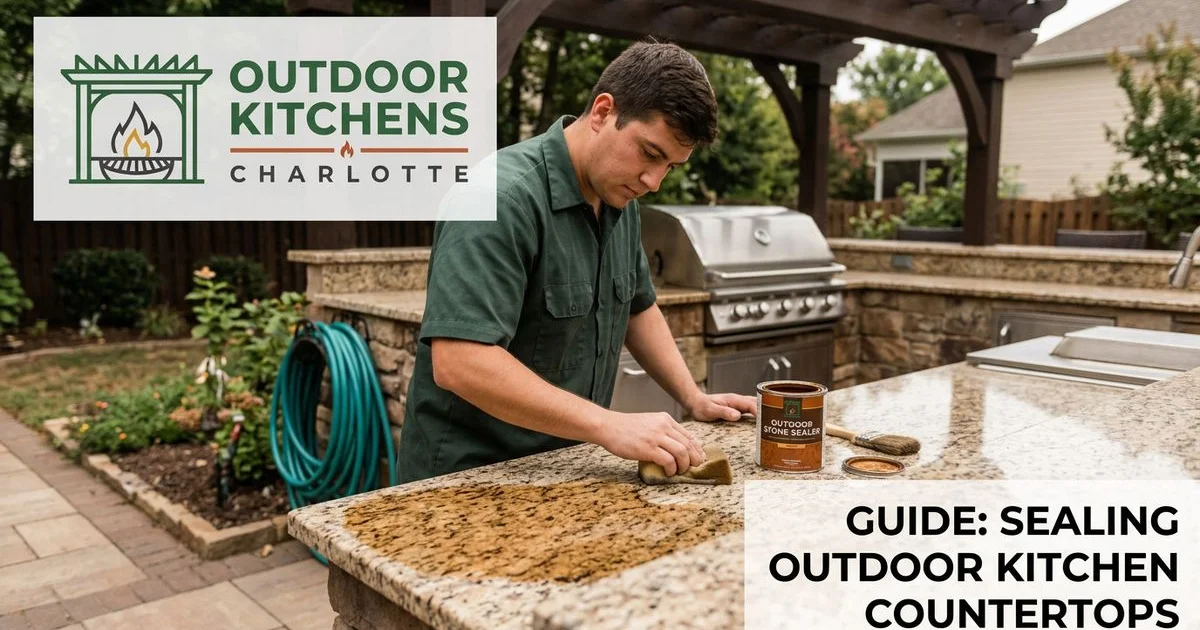
We apply the liquid using a clean, lint-free cloth or a foam applicator pad. Work in small sections to ensure a thin, perfectly even coat. Penetrating sealers like StoneTech BulletProof require 10 to 15 minutes to absorb properly.
Our application teams carefully wipe away any excess liquid after this waiting period. Leaving excess liquid on the surface causes a sticky, hazy residue that is incredibly difficult to remove. Two coats provide optimal protection against aggressive moisture conditions.
- Apply the first coat evenly and let it penetrate.
- Wipe away the excess liquid completely.
- Apply the second coat after the first has dried, which usually takes 2 to 4 hours.
- Allow the treatment to cure fully for 24 to 72 hours.
We require that you keep the surface dry and avoid placing any items on it during this critical window.
Sealing Schedule for Charlotte Homeowners
Our maintenance schedules depend entirely on your material and how much weather exposure the patio receives.
- Granite should be resealed every 12 to 18 months for fully exposed installations, or 18 to 24 months if covered.
- Natural stone options like quartzite and slate follow a similar 12 to 18 month schedule.
- Soapstone is a notable exception because it is naturally non-porous and does not require traditional sealants.
- Applying periodic mineral oil enhances the appearance of soapstone beautifully.
Our concrete projects need the most frequent attention, often requiring a fresh coat every 6 to 12 months. Topical coatings degrade much faster under direct sunlight and heavy rain.
The 15-Minute Water Drop Test
We use a simple water test to determine exactly when a fresh application is necessary. Sprinkle a tablespoon of water on the surface and wait for 15 minutes.
A well-protected surface causes the water to bead up and sit harmlessly on top. Our rule of thumb is that if the water absorbs or darkens the stone in under four minutes, you must reapply immediately.
Performing this quick test every few months keeps you ahead of material degradation. Catching the problem early prevents stains from setting into the pores.
Common Sealing Mistakes to Avoid
We see homeowners make the same easily avoidable errors year after year. Over-applying the liquid is perhaps the most frequent issue. More liquid does not equal more protection.
Our restoration crews spend hours stripping away sticky, hazy film caused by excess product left to dry. Always follow the specific application rate and wipe away excess promptly.
Temperature plays a massive role in a successful project. We never apply these chemicals in direct sunlight or during peak summer heat. The 90-degree summer days cause the liquid to dry on the surface before it can penetrate properly.
“Applying sealer when the surface temperature is outside the 50 to 80 degree Fahrenheit window is a guaranteed recipe for failure.”
We also warn against skipping the deep cleaning step. Applying a fresh coat over dirty stone permanently locks in stains and contaminants.
Using interior products on exterior surfaces guarantees premature failure. We only use formulas specifically rated for harsh exterior environments.
Protecting Your Outdoor Kitchen Investment
Our comprehensive maintenance plans treat sealing as just one part of the puzzle. Regular cleaning, prompt stain treatment, and seasonal inspections all contribute to long-term beauty. Establishing a consistent routine ensures your patio maintains its value for decades.
Our professional stone masonry outdoor kitchen contractors can recommend the best materials for your specific yard. Choosing the right materials from the start makes ongoing maintenance significantly easier. Taking the time to learn how to seal outdoor kitchen countertops for Charlotte weather properly yields enormous returns in durability and peace of mind.
We promise that a well-maintained surface performs better through every season. Start by buying a pH-neutral cleaner and ordering a quality penetrating sealer today. Your pristine outdoor space will be ready for the next big summer barbecue.
Sarah Reynolds
Content Editor & Outdoor Living Enthusiast
Charlotte-based home improvement writer specializing in outdoor living.