Outdoor Kitchen Ceiling Fans and Heaters: Comfort in Every Season
Keep your Charlotte outdoor kitchen comfortable year-round with the right ceiling fans and heaters. Product recommendations and installation tips.
Sarah Reynolds
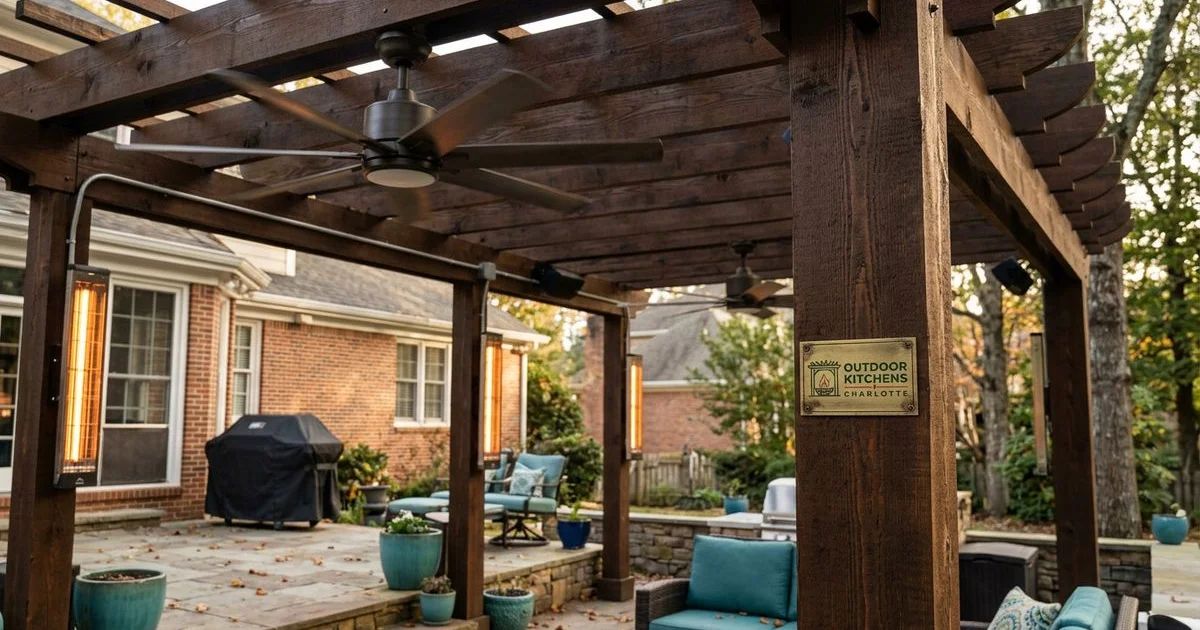
We often see a beautiful outdoor kitchen in Charlotte sit completely empty just because the temperature is slightly off. Charlotte’s summers push past 90 degrees with suffocating humidity, and winter evenings easily drop into the 30s with biting winds. Our recent projects building outdoor kitchens in Charlotte show that the difference between a patio used twice a month versus twice a week comes down to installing the right climate controls.
Those 53 days of 90-degree-plus heat we tracked in Charlotte during recent summers make cooling systems mandatory.
We will explore the best outdoor kitchen ceiling fans and heaters to provide comfort in every season. Let’s examine the data behind these systems, and then walk through the exact installations that actually work.
Choosing the Right Ceiling Fan for Your Outdoor Kitchen
Our team knows that not every ceiling fan is built for outdoor use, and installing the wrong type can be dangerous and costly. Outdoor ceiling fans are rated by the UL (Underwriters Laboratories) in two categories that matter: damp-rated and wet-rated.
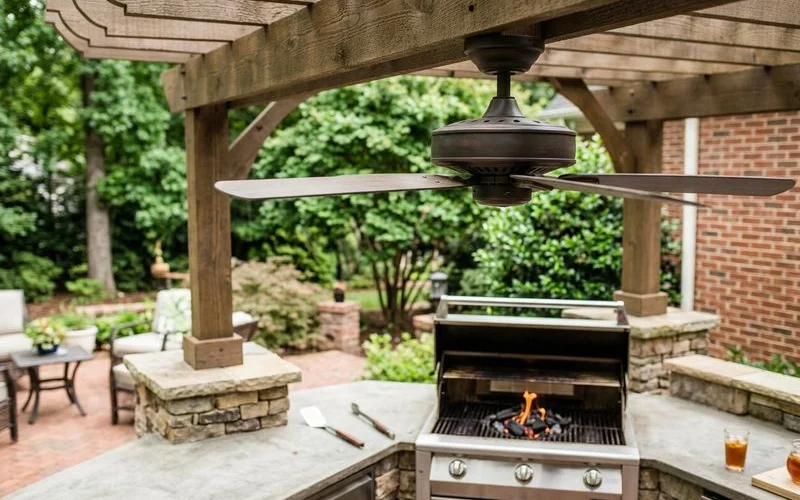
We highly recommend wet-rated models for any exposed structures. Damp-rated fans are designed for covered areas where they will not come into direct contact with water. Our clients often use these in a deep porch or a fully enclosed pavilion. These fans handle humidity and indirect moisture well, but they should never be exposed to rain, sprinkler spray, or heavy condensation.
Understanding Damp-Rated vs. Wet-Rated Fans
We consider wet-rated fans to be the safest choice for Charlotte outdoor kitchens, even under a covered structure. Charlotte’s wind-driven rain, high humidity, and occasional severe storms can push moisture into covered areas. Our installations rely on IP65 waterproof ratings, which ensure the fan handles these conditions without risk of electrical failure or corrosion. Wet-rated units are built to withstand direct water exposure, including heavy rain and spray.
Sizing and Motor Selection for Maximum Airflow
We always match the fan blade span to the square footage of your covered area. To maximize airflow, follow these general sizing guidelines:
- Small Patios (Up to 225 sq. ft.): Select a 42-inch to 52-inch fan producing around 3000 CFM.
- Medium Spaces (225 to 400 sq. ft.): Choose a 60-inch model like the Hunter Dempsey, which exceeds 5000 CFM.
- Large Pavilions (400+ sq. ft.): Install multiple smaller fans spaced evenly or a massive 72-inch unit.
- Placement Rule: Mount fans at least 8 feet above the floor with blades 10 inches below the ceiling.
Our installers find that motor quality matters significantly for outdoor fans because they run longer and harder than indoor models. DC motor fans are generally quieter, more energy-efficient, and offer more speed settings than traditional AC motor fans. Our data shows that an Energy Star-certified DC motor reduces energy consumption by up to 70 percent. In Charlotte’s extended summer season, this incredible efficiency offsets the higher initial purchase price within two to three years.
We always remind homeowners that fan direction is a critical detail. During summer, set the ceiling fan to spin counterclockwise to push air downward and create a cooling effect. Our winter setup involves reversing the fan to spin clockwise at a low speed. This gently pushes warm air that collects at the ceiling back down toward the occupied seating area.
Types of Outdoor Heaters and Their Best Applications
We know that outdoor heaters come in several forms, each suited to different spaces, budgets, and heating needs. For Charlotte patios, the most effective options are ceiling-mounted infrared heaters, freestanding propane heaters, and built-in fire features.
Ceiling and Wall-Mounted Infrared Heaters
Our top choice for covered outdoor kitchens remains ceiling-mounted electric infrared heaters. These units, like those from premium brands Bromic or Infratech, deliver targeted warmth without trying to heat the open air. We prefer infrared heaters because they emit electromagnetic radiation that heats objects and people directly, similar to sunlight. Electric infrared heaters in the 1500 to 3000-watt range provide comfortable warmth for a 100 to 200-square-foot area.
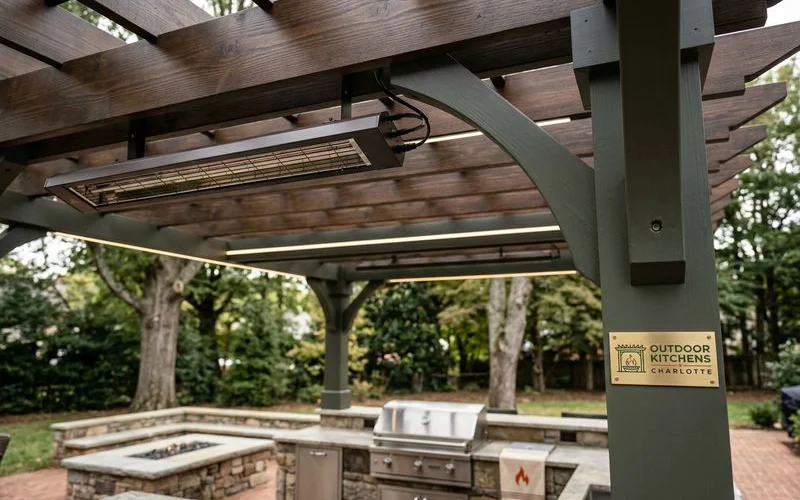
We also frequently install natural gas infrared heaters for clients who already have a gas line for cooking appliances. These heaters produce massive heat and cost less to operate per hour, though they require professional gas line installation. Our standard recommendation is a single natural gas infrared heater rated at 40,000 BTU to effectively heat a 200 to 300-square-foot covered area.
Portable and Tabletop Propane Solutions
We appreciate the portability of the tall, mushroom-shaped propane models commonly seen at restaurants. They produce a cone of radiant heat covering an 8 to 10-foot radius and can be positioned wherever warmth is needed most. Our cost analysis shows a standard 20-pound propane tank powers most patio heaters for 8 to 12 hours on medium heat. Refilling that tank in the Charlotte area typically costs between $20 and $24, adding an ongoing fuel expense.
We created a quick comparison to make selecting a heating source easier:
| Heater Type | Best Application | Heat Output | Primary Advantage |
|---|---|---|---|
| Electric Infrared | Covered patios, flush mounting | 1500 - 3000 Watts | Zero emissions, low profile |
| Natural Gas | Permanent structures with gas lines | 40,000+ BTU | Lowest operating cost |
| Freestanding Propane | Open areas, flexible seating | 40,000 BTU | Total portability, no wires |
Our team also utilizes tabletop propane heaters for smaller, more intimate dining spaces. These compact units sit directly on the table and provide targeted warmth for the immediate dining group. We find they produce less heat than full-size models but create a cozy atmosphere during cooler months. They act as a great supplementary heat source alongside primary ceiling units.
Installation Considerations for Charlotte Homeowners
We emphasize that proper installation requires planning during the design phase of your outdoor kitchen, not as an afterthought. Retrofitting electrical circuits and mounting hardware into a completed structure is significantly more expensive and disruptive. Our electricians strictly follow the latest updates to the National Electrical Code (NEC) for all outdoor electrical work. The 2023 NEC code updates, enforced in North Carolina into 2026, introduced major changes under Section 210.8(F).
We must now ensure GFCI protection for all outdoor 125-volt through 250-volt receptacles supplied by single-phase branch circuits. This code explicitly includes hardwired outdoor equipment, meaning your dedicated heater and fan circuits need proper fault protection. Our standard setup for electric infrared heaters includes one or two dedicated 20-amp circuits, depending on the heater wattage. Position heaters to provide overlapping coverage of the primary gathering areas, typically mounted 8 to 9 feet above the floor and angled downward.
We strongly advise against mounting heaters directly above grills or fire features. The rising heat interferes with the unit’s radiant output and can permanently damage the internal components. Our team installs controls and smart switches conveniently near the cooking area so you can adjust settings without leaving the grill. Modern remote controls allow you to operate fans and heaters directly from a smartphone application.
Essential Installation Checklist
We use a specific checklist before beginning any electrical work on a patio structure. Review these critical requirements with your contractor:
- Dedicated Circuits: Ensure fans run on a dedicated circuit rated for the motor’s specific amperage.
- Proper Mounting Boxes: Use a ceiling box explicitly rated for heavy fan weight, not just a standard light fixture box.
- NEC 2023 Compliance: Verify that all new 125V to 250V outdoor connections include GFCI protection.
- Gas Load Calculations: Have a licensed gas fitter account for the total BTU demand of all connected appliances before adding a natural gas heater.
Our project managers coordinate these details so the final installation runs flawlessly. Skipping these steps often leads to tripped breakers or inadequate heating during freezing weather.
Energy Costs and Operating Efficiency
We know that running ceiling fans and heaters adds to your utility costs, but the amounts are manageable when you choose efficient products. A typical outdoor ceiling fan running on medium speed consumes 30 to 75 watts per hour. Our calculations show that running a fan for 8 hours a day during Charlotte’s six-month warm season costs roughly $10 to $25 per season in electricity. This represents an insignificant cost for the incredible comfort it provides.
Electricity Rates and Fan Efficiency
We closely monitor local utility trends, noting that Duke Energy instituted rate hikes in 2025 and 2026. Average residential rates in the Carolinas now hover between 12 and 14 cents per kilowatt-hour, with further increases proposed for 2027. Our updated models show that an electric infrared heater consuming 3000 watts translates to 3 kilowatt-hours of usage. At current electricity rates, running this heater costs approximately $0.36 to $0.42 per hour.
We consider this to be a highly reasonable expense for extending your outdoor entertaining season. Running a heater for 4 hours during a winter evening event costs roughly $1.44 to $1.68. Our clients using propane patio heaters spend slightly more, consuming roughly 1 to 2 pounds of propane per hour. With 20-pound propane refills costing around $20 to $24 in the Charlotte area, this translates to roughly $1.00 to $2.40 per hour of operation.
Heating Fuel Comparisons
We compiled a quick breakdown of average hourly operating costs based on current 2026 energy rates:
| Climate System | Energy Source | Average Cost Per Hour |
|---|---|---|
| DC Motor Ceiling Fan | Electricity | < $0.01 |
| Infrared Heater (3000W) | Electricity | $0.36 - $0.42 |
| Propane Patio Heater | Liquid Propane | $1.00 - $2.40 |
| Natural Gas Heater | Natural Gas | < $0.50 |
Our team recommends natural gas heaters for the lowest per-hour operating cost of any heating option. Charlotte’s natural gas rates make infrared gas heaters extremely economical. Our data proves they provide more warmth per dollar than either electric or propane alternatives. Strategic use of these systems guarantees your utility bills stay completely under control.
Creating a Complete Comfort System
We believe the most effective approach combines ceiling fans and heaters with other structural elements to create a comprehensive climate management system. Wind screens or retractable curtains on the windward side of a covered area block cold drafts in winter and redirect cooling breezes in summer. Our exterior designers frequently add automated screens from brands like Phantom Screens to seal in the heat. A built-in fireplace or fire pit provides supplemental warmth and gorgeous ambiance during cooler months.
We always add proper lighting to these spaces to extend usability into the night. Dimmable task lighting over cooking areas and ambient lighting for dining are absolute necessities. Our primary goal is to design your covered outdoor kitchens with comfort in mind from the very first blueprint. Every component works together to create an outdoor space that feels as inviting as any room inside your Charlotte home.
We know that an investment in quality comfort systems pays dividends every time you step outside to cook or eat. Adding a high-performance fan or a targeted infrared heater transforms your patio from a seasonal luxury into a year-round living space. Our team is ready to help you finalize your layout and select the perfect fixtures. Evaluate your current patio setup today, and start planning your upgrade to ensure Outdoor Kitchen Ceiling Fans and Heaters: Comfort in Every Season.
Sarah Reynolds
Content Editor & Outdoor Living Enthusiast
Charlotte-based home improvement writer specializing in outdoor living.