Outdoor Kitchen Lighting: How to Light Your Cooking and Dining Areas
The complete guide to outdoor kitchen lighting in Charlotte. Task lighting, ambient lighting, and accent lighting tips for safety and atmosphere.
Sarah Reynolds
Our professional service team frequently sees exterior spaces treated as an afterthought in landscape design. Nighttime usability drops significantly without proper illumination. We recommend treating the exterior space with the same functional respect as your indoor kitchen, because proper outdoor kitchen lighting: how to light your cooking and dining areas makes a massive difference.
A well-lit patio extends your entertaining hours well past sunset.
Our approach focuses on combining specific lighting layers to create a safe and inviting atmosphere. In Charlotte, summer evenings are perfect for outdoor dining. Our team of outdoor kitchen specialists in Charlotte designs lighting plans that extend your cooking season well into the night. We will break down the exact strategies and fixtures needed to transform your cooking area into a true evening destination.
Understanding Outdoor Kitchen Lighting: How to Light Your Cooking and Dining Areas
We structure every exterior project around three distinct functional layers. Task lighting, ambient lighting, and accent lighting each serve a specific purpose. Our designers rely on this three-tiered system to build spaces that look beautiful and perform perfectly. A single floodlight attached to the back of the house creates harsh shadows and ruins the mood.
We categorize task lighting as the bright workhorse of the cooking zone. This focused illumination goes exactly where you prep food and handle hot grill grates. Our team specifies fixtures that cut through the darkness to keep your workspace safe. You cannot cook safely if you are guessing about meat temperatures in the shadows.
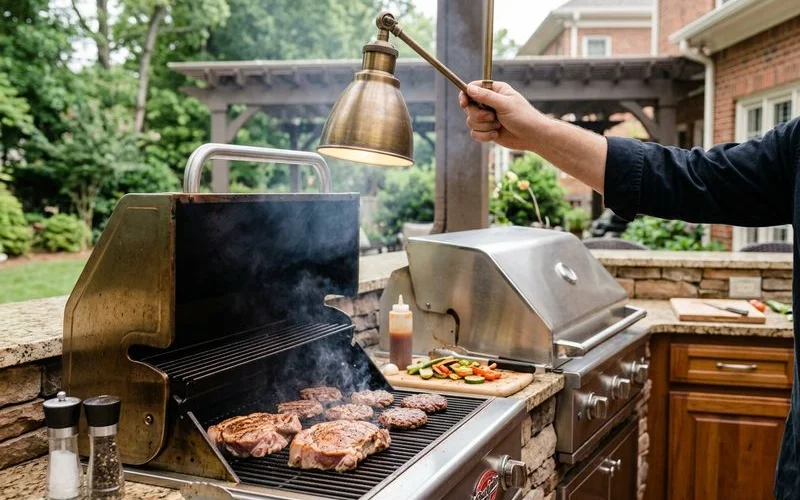
We use ambient lighting to provide soft general illumination for the broader living area. This layer sets a relaxed mood while ensuring guests can move around the patio safely. Our goal with ambient fixtures is a diffused glow rather than a harsh spotlight. Proper placement prevents annoying glare in seating areas.
We apply accent lighting as the final polish to highlight architectural features and landscaping. This layer adds necessary depth and dimension to the yard after dark. We organize these layers using a strict set of performance metrics. The right combination of brightness and color temperature makes all the difference.
| Lighting Layer | Primary Purpose | Ideal Brightness (Lumens) | Recommended Color Temperature |
|---|---|---|---|
| Task Lighting | Safety and food preparation | 500 to 800 per fixture | 3500K to 4000K |
| Ambient Lighting | General movement and mood | 50 to 100 per bulb | 2200K to 2700K |
| Accent Lighting | Highlighting design features | 50 to 200 per fixture | 2700K to 3000K |
Task Lighting for the Cooking Zone
We consider the cooking zone the most critical area for high-quality illumination. You need clear visibility to judge food doneness and handle sharp knives safely. Our standard recommendation for a grilling station is 300 to 400 lumens per square foot. This intensity prevents shadows from obscuring your workspace.
Pendant Lighting Applications
We frequently install pendant lights from pergolas or pavilion ceilings directly over prep counters. These fixtures provide excellent downward illumination and serve as decorative elements during the day. Our preferred models feature industrial metal shades to block wind and direct the beam precisely. Damp-rated or wet-rated fixtures are mandatory depending on your specific roof structure.
Recessed Downlight Integration
We rely on recessed downlights for clean and unobtrusive coverage in covered patios. Spacing these fixtures about thirty inches apart over the countertop guarantees even light distribution. Our top pick for 2026 is the Kichler Horizon Select LED Downlight series. These units output 1,110 lumens and feature selectable color temperatures for precise visual control.
Under-Cabinet Strip Lights
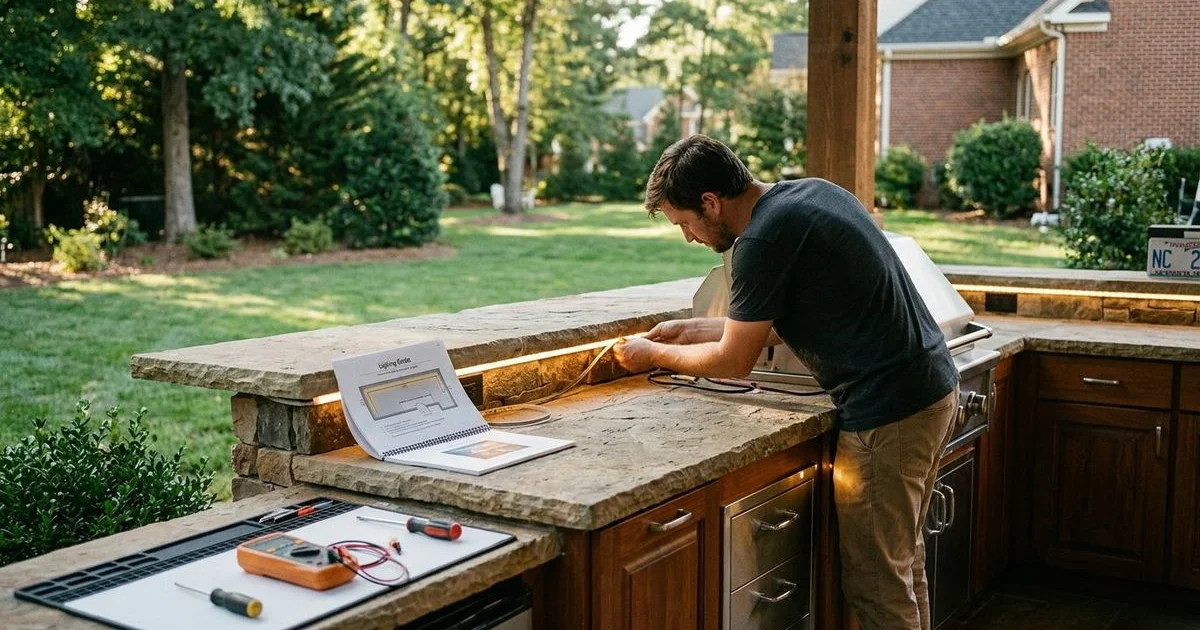
We always include under-cabinet LED strip lights for a simple and highly effective upgrade. These adhesive strips mount inside vent hoods or under countertop overhangs to cast light directly onto the workspace. Our installations often utilize dimmable 12-volt LED strips to allow easy brightness adjustments. This feature gives you total control over the glare.
Ambient Lighting for the Dining and Lounge Areas
We shift the focus from bright utility to warm hospitality once you step out of the cooking zone. The Piedmont climate in Charlotte encourages late-night lounging, so the atmosphere needs to feel inviting. Our favorite ambient solutions soften the environment while keeping the space visible. Proper layering prevents the yard from feeling like a stadium.
Commercial-Grade String Lights
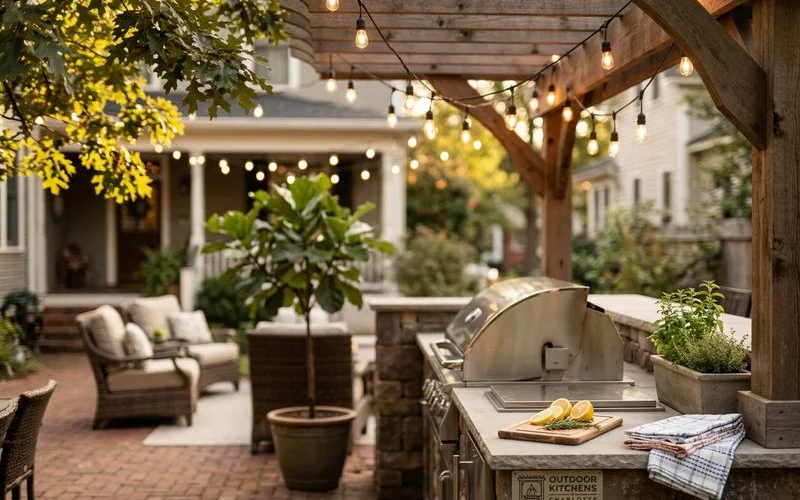
We see string lights as the most popular ambient choice for residential spaces. Draping them over a pergola or along a fence line creates an irresistible, festive glow. Our top recommendation for 2026 is the Enbrighten Vintage LED Cafe Light series. These shatter-resistant acrylic bulbs link up to 750 feet and withstand heavy summer rain without degrading.
Lanterns and Wall Sconces
We use mounted lanterns and sconces to provide structure and formality to a dining layout. Gas lanterns remain a classic staple in traditional neighborhoods, adding a sophisticated touch. Our electric alternative involves fixtures equipped with LED flame bulbs. These produce a similar warm flicker without the hassle of running new gas lines.
Fire Features as Light Sources
We frequently incorporate fire features as dual-purpose lighting and heating elements. A gas fire pit or a tabletop fire bowl provides a soft, flickering glow that electric bulbs cannot perfectly replicate. Our designs often center the lounge area around a masonry fire pit for maximum comfort. Guests naturally gravitate to these warm gathering spots.
Accent Lighting to Elevate Your Design
We utilize accent lighting to give the finished project a polished, professionally designed appearance. This subtle layer highlights stonework and landscaping to create a stunning nighttime visual. Our techniques turn a standard patio into a high-end retreat. A few well-placed bulbs make a massive difference.
Landscape Uplighting
We place small directional fixtures at the bases of mature trees and architectural columns. Aiming the beam upward creates dramatic shadows and emphasizes vertical textures. Our installations in neighborhoods like Myers Park often use 316 marine-grade stainless steel fixtures, such as the WAC Landscape Tyler line. These units resist corrosion and keep the tree canopy looking spectacular year-round.
Strategic Backlighting
We install LED strips behind floating countertops and inside glass-door cabinets to create a soft halo effect. This technique adds profound visual depth to the kitchen island structure. Our clients usually prefer a single warm white tone, though color-changing strips offer fun flexibility for parties. Consistent colors look much more refined.
Step and Path Safety Lighting
We prioritize low-profile LED step lights recessed into risers to ensure safe movement. These discreet fixtures provide just enough brightness to reveal trip hazards without causing eye glare. Our preferred path lights output between 12 and 100 lumens to gently guide guests back to the house. Solar options work well, but hardwired paths offer better reliability.
Electrical Planning and Safety
We handle electrical planning with absolute strictness because outdoor installations face severe weather exposure. Cutting corners on wiring puts your property and your family at risk. Our safety protocols adhere strictly to the latest National Electrical Code standards. Water and electricity make a dangerous combination.
GFCI Protection and Ratings
We require Ground Fault Circuit Interrupter (GFCI) breakers for all exterior kitchen circuits. This technology instantly cuts power if water compromises the system. Our team specifies damp-location ratings for covered patio fixtures and wet-location ratings for anything exposed to direct rain. Verifying these ratings prevents premature equipment failure.
Charlotte Permit Requirements
We process electrical permits through the Mecklenburg County Accela Citizen Access portal for every installation. Any new electrical circuit or significant alteration legally requires this county oversight and a subsequent inspection. Our project managers handle this paperwork upfront to avoid costly tear-outs and fines later. Proper documentation gives homeowners total peace of mind.
Smart Control Panels
We suggest adding a dedicated lighting control panel near the main house entry point. Separate dimmer switches for task, ambient, and accent layers give you total control over the yard’s mood. Our smart switch setups allow you to automate schedules so the patio is fully illuminated before you even step outside. Waking up to a dark yard becomes a thing of the past.
Choosing the Right Color Temperature
We carefully select color temperatures, measured in Kelvin, to dictate how the space feels at night. Lower values produce a warm, yellowish glow, while higher numbers create a crisp, bluish-white appearance. Our designers use specific Kelvin ranges to match the function of each zone. Matching the temperature to the task ensures the yard looks cohesive.
- 2200K to 2700K (Warm White): We use this range for string lights and ambient seating areas to create a cozy, campfire-like mood.
- 2700K to 3000K (Soft White): This slightly brighter tone works perfectly for landscape uplighting and general accent fixtures.
- 3500K to 4000K (Cool White): Our team reserves this crisp light exclusively for task areas over the grill to ensure highly accurate color rendering of food.
Using anything above 5000K ruins the nighttime atmosphere. These harsh, clinical spectrums clash entirely with the relaxed nature of backyard entertaining.
Creating Your Lighting Plan
We recommend finalizing your electrical schematic during the initial layout phase before construction begins. Early planning allows electricians to hide conduit and wiring inside the masonry.
Our design process prevents the ugly surface-mounted wires that result from retrofitting. Post-construction wiring changes add unnecessary labor costs to your invoice.
We factor in your home’s orientation, existing yard illumination, and neighborhood light pollution.
A focused approach to outdoor kitchen lighting: how to light your cooking and dining areas guarantees a beautiful and highly functional result. Our custom outdoor kitchen design services include a comprehensive strategy that addresses task, ambient, and accent layers. Contact us today to start drafting a customized schematic for your Charlotte property.
Sarah Reynolds
Content Editor & Outdoor Living Enthusiast
Charlotte-based home improvement writer specializing in outdoor living.