Pergola vs Pavilion for Your Outdoor Kitchen: Which Cover Is Best?
Comparing pergolas and pavilions for Charlotte outdoor kitchens. Coverage, cost, permits, and aesthetics to help you choose the right structure.
Michael Carter
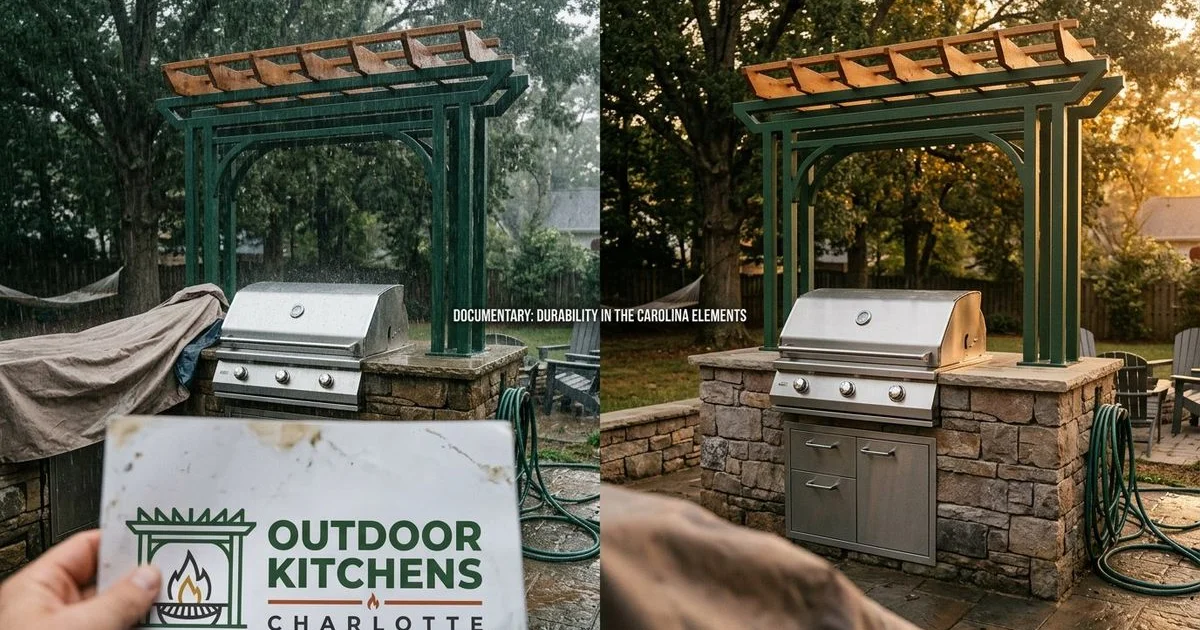
We see this happen constantly: homeowners invest heavily in premium grills but neglect overhead protection, resulting in rained-out barbecues. A sudden afternoon thunderstorm easily ruins the entire event. Our professional service team of outdoor kitchen experts in Charlotte understands that a cooking area is only as good as the amount of time you can actually use it.
This makes choosing the right cover structure the most critical decision for your backyard project.
You might be weighing a pergola vs pavilion for your outdoor kitchen: which cover is best? The details below explore current material costs, local building code requirements, and specific upgrades that guarantee year-round usability. Let’s look at the data and outline a few practical ways to finalize your design.
What Sets Pergolas and Pavilions Apart
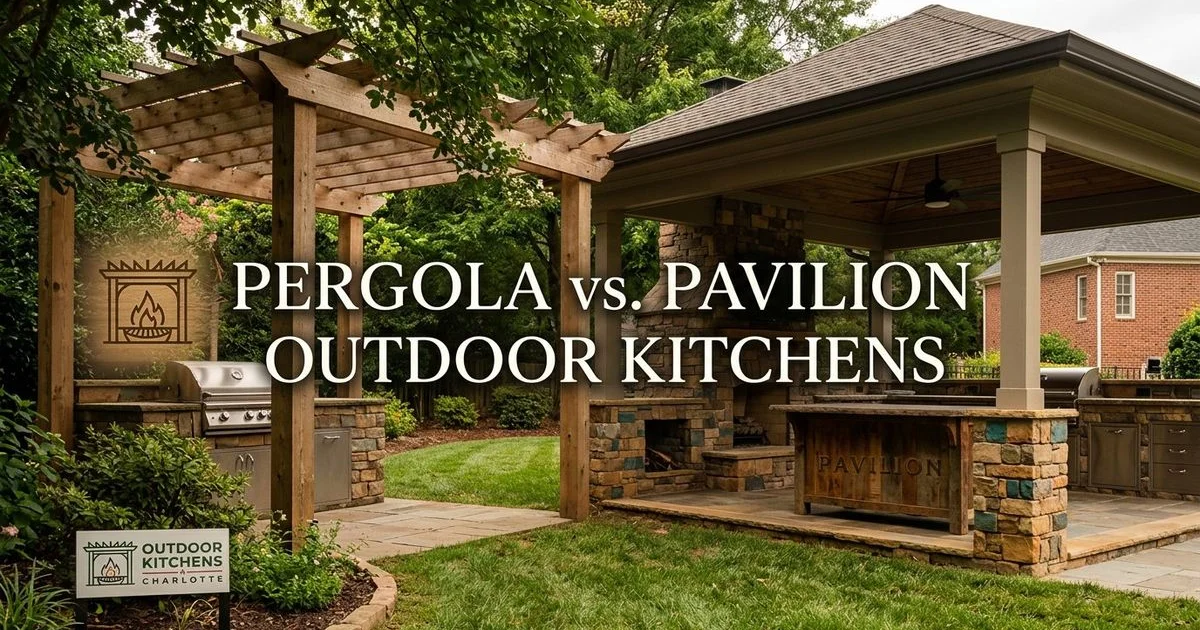
A pergola is an open-roof structure consisting of vertical posts supporting a grid of crossbeams and rafters. The traditional pergola design features an open lattice roof that provides partial shade while allowing sunlight, air, and rain to filter through. Modern pergolas offer much more advanced technology to handle the elements.
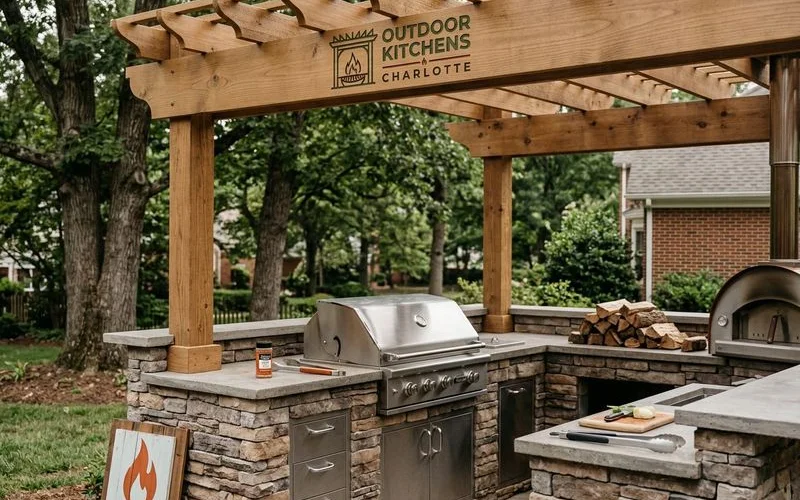
We highly recommend looking at motorized louvered aluminum systems like the StruXure Pivot 6 model. These high-tech structures feature patented interlocking louvers that rotate a full 170 degrees. You can open them completely for full sun or close them tightly to form a solid, waterproof roof during a downpour. This specific upgrade instantly transforms a fair-weather space into a highly adaptable environment.
A pavilion is a fully roofed structure with open sides, essentially a freestanding roof supported by columns or posts. Pavilions provide complete overhead protection from rain, snow, and direct sun while maintaining open-air ventilation on all sides. The solid roof easily incorporates heavy fixtures that are impractical with an open pergola design.
Here are the primary distinctions between the two structures:
- Roof Design: Pergolas have slatted or louvered roofs, while pavilions feature solid, shingled, or metal roofs.
- Element Protection: Traditional pergolas filter the elements, whereas pavilions completely block them.
- Integrated Technology: Pavilions easily support heavy fixtures like recessed heaters and full lighting systems.
- Flexibility: Modern smart pergolas allow you to adjust the amount of sunlight entering the space.
Weather Protection and Year-Round Use in Charlotte
Charlotte’s climate makes weather protection a significant consideration for any outdoor cooking design. The city receives an average of 43.1 inches of rain annually, making a waterproof barrier highly valuable. We also saw extreme drought conditions return to portions of Mecklenburg County in early 2026, meaning intense, uninterrupted sun exposure requires excellent shade management.
A standard pergola with an open lattice roof provides approximately 25 to 50 percent shade coverage, depending on the spacing and orientation of the rafters. This partial shade is pleasant during mild weather but offers no protection during heavy rain. Adding a retractable canopy improves shade to 80 to 90 percent, but still provides minimal storm protection.
Heating Solutions for Winter Months
Our designers often utilize commercial-grade heating solutions to combat winter temperature drops. These setups frequently include Infratech WD-Series dual-element heaters installed flush inside pavilion ceilings. The 6,000-watt electric fixtures provide concentrated radiant heat that warms objects and people rather than just heating the ambient air. We find that this specific addition allows you to comfortably cook outside even when January temperatures fall below freezing.
A pavilion provides complete protection from rain and direct sun, allowing you to host regardless of weather conditions. During Charlotte’s frequent afternoon thunderstorms, a pavilion lets you continue grilling without retreating indoors.
A covered outdoor kitchen with a solid roof is the most practical choice for serious outdoor cooks who refuse to let weather dictate their schedule.
Cost Comparison for Charlotte Projects
The cost difference between pergolas and pavilions is substantial, though both represent a wide range depending on materials, size, and complexity.
We always advise clients to consider the long-term financial benefits before looking at the initial price tag. According to 2025 and 2026 real estate data, a well-designed outdoor kitchen yields a return on investment (ROI) between 55% and 200%. Compare this to an in-ground swimming pool, which typically returns as little as 7%. A recent Houzz study also noted that over 60% of homeowners remodeling their kitchens now consider adding outdoor cooking areas.
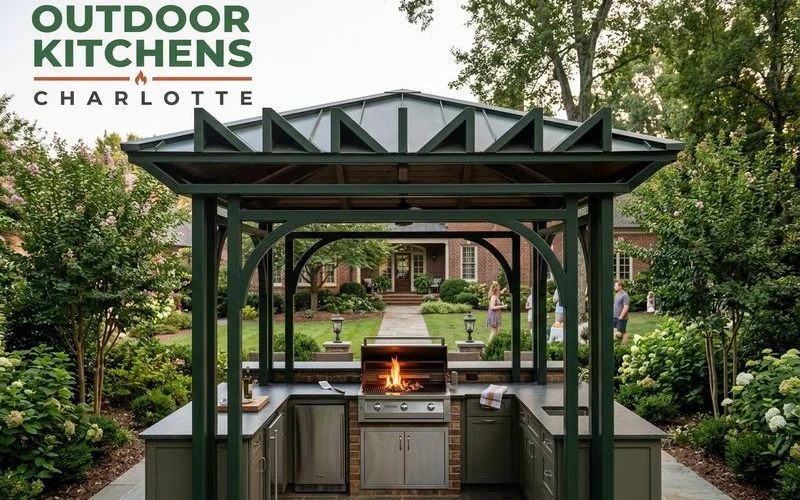
A basic wood pergola in Charlotte starts at approximately $3,000 to $5,000 for a 12-by-14-foot structure using pressure-treated lumber. Cedar and redwood pergolas range from $6,000 to $12,000. High-end aluminum pergolas with motorized louvered roofs easily reach $15,000 to $30,000.
Pavilions cost more due to their solid roof construction and engineered load requirements. A basic wood-framed pavilion with asphalt shingle roofing starts at $8,000 to $15,000 for a 12-by-14-foot structure. Custom pavilions with tongue-and-groove ceilings, integrated lighting, and premium finishes can easily exceed $40,000.
| Feature | Traditional Pergola | Motorized Pergola | Custom Pavilion |
|---|---|---|---|
| Base Price Range | $3,000 - $12,000 | $15,000 - $30,000 | $15,000 - $40,000+ |
| Rain Protection | Poor | Excellent (when closed) | Excellent (Always) |
| Maintenance Need | High (for wood) | Low (Aluminum) | Medium (Roofing) |
| Permitting Difficulty | Low | Medium | High |
Our financial analysis shows that a pavilion effectively gives you twice as many usable outdoor cooking days as an open pergola. The cost-per-use of a pavilion often comes out lower than a pergola over a ten-year period, despite the higher initial investment.
Permits and Building Requirements in Charlotte
Mecklenburg County requires building permits for most permanent outdoor structures, and the requirements differ greatly between pergolas and pavilions. Understanding these local laws before breaking ground saves time, money, and stressful project delays.
We frequently use the Accela Citizen Access portal to track City of Charlotte zoning use permits for our clients. North Carolina state law allows a single-story accessory building up to 12 feet high and 200 square feet to be built without a permit, provided it is non-habitable and meets zoning setbacks. Any structure larger than this, or anything requiring utility connections, demands a formal permit.
Freestanding pergolas under 200 square feet often fall under this exemption. The permitting process for larger pergolas remains straightforward because the open roof design does not drastically alter wind load calculations. Mecklenburg County does not require a permit for cosmetic work, but any project valued over $40,000 or involving load-bearing structures triggers a mandatory review.
Strict Pavilion Codes
Pavilions almost always require a building permit in Charlotte because their solid roof creates significant wind load, snow load, and drainage considerations. These structures must be heavily engineered to meet residential building codes.
The permitting process for pavilions requires stamped engineering drawings, site plans, and mandatory inspections at multiple stages of construction. Permit fees in Mecklenburg County typically range from $200 to $800 for a pavilion-sized structure, not including the separate City of Charlotte zoning fees.
HOA restrictions add another massive layer of consideration for Charlotte neighborhoods. Some associations limit the height or materials of outdoor structures, and a few restrict solid-roofed buildings entirely. You must review your specific HOA covenants before committing to either option.
Aesthetic Impact and Design Flexibility
Both pergolas and pavilions dramatically enhance the visual appeal of your outdoor kitchen, but they create entirely different design moods.
Pergolas excel at creating a light, airy atmosphere that blends seamlessly with existing garden settings. The open lattice roof is ideal for growing climbing plants like wisteria, clematis, or Confederate jasmine. These plants can transform the wooden frame into a lush living canopy over time. String lights woven through the rafters create an enchanting evening ambiance that feels incredibly natural.
Pavilions project a much more substantial, permanent presence that anchors the outdoor kitchen as a defined room. The solid roof provides a natural ceiling that defines the space visually and acoustically. This enclosed feeling pairs naturally with the traditional, craftsman, and farmhouse architectural styles common throughout the Charlotte area.
Integrating High-End Entertainment
Design flexibility strongly favors pavilions when installing integrated technology and entertainment features. A solid ceiling easily supports ceiling fans, heavy pendant fixtures, and mounted directional speakers.
We always recommend installing specialized electronics if you want a true outdoor living room. A popular choice is the SunBriteTV Pro 2 Series, which is built specifically for full-time exterior use. This commercial-grade outdoor television operates safely in extreme temperatures ranging from -24 to 122 degrees Fahrenheit. Our installation crews love the 1,000 NIT ultra-bright screen because it ensures you can clearly see the big game even during a sunny afternoon barbecue.
Pergolas can accommodate some electronics, but the open roof severely limits what you can practically install and expose to the harsh weather.
Pergola vs Pavilion for Your Outdoor Kitchen: Which Cover Is Best?
The decision between a pergola and a pavilion comes down to three key factors: your budget, your aesthetic preferences, and exactly how much weather protection you demand.
Choose a pergola if you primarily cook outdoors during fair weather or want a lighter visual impact in your landscape. This is also the right choice if you desire the ability to grow climbing plants, or need to keep your base structure budget under $10,000. A pergola with a retractable canopy offers a fantastic compromise between coverage and openness.
Choose a pavilion if you want to cook outdoors regardless of the daily forecast. This structure is essential if you plan to install heavy ceiling fans, luxury lighting, or recessed heaters. It provides a defined outdoor room rather than just a lightly shaded cooking station.
| Decision Factor | Best Choice | Primary Reason |
|---|---|---|
| Strict Budget (Under $10k) | Pergola | Lower material and permitting costs. |
| Year-Round Cooking | Pavilion | 100% protection from rain and snow. |
| High-End Electronics | Pavilion | Solid ceiling protects TVs and speakers. |
| Garden Aesthetic | Pergola | Open slats support climbing vines. |
| Adjustable Shade | Smart Pergola | Motorized louvers adapt to the sun. |
For many Charlotte homeowners, the pavilion proves to be the superior long-term investment. Charlotte’s unpredictable afternoon storms and intense summer heat make full roof coverage highly desirable. A well-designed covered outdoor kitchen with a pavilion roof quickly becomes the main center of backyard living.
We encourage you to ensure your chosen structure is designed and built by professionals who understand Charlotte’s specific building codes. Proper engineering, premium materials, and skilled construction are the factors that transform a simple backyard into an extraordinary outdoor living space.
Conclusion
Choosing the perfect overhead structure completely transforms how you use your property. You now have the facts to answer the debate of a pergola vs pavilion for your outdoor kitchen: which cover is best?
We encourage you to start planning your build today. Contact a local design professional to get your formal site plan started.
Michael Carter
Outdoor Living Design Specialist
15+ years designing outdoor kitchens across Charlotte, NC.