Stone Veneer vs Natural Stone for Outdoor Kitchens: Cost and Durability
Should you choose stone veneer or natural stone for your Charlotte outdoor kitchen? Compare costs, durability, installation, and appearance.
Michael Carter
We know that building an outdoor space is a major financial decision.
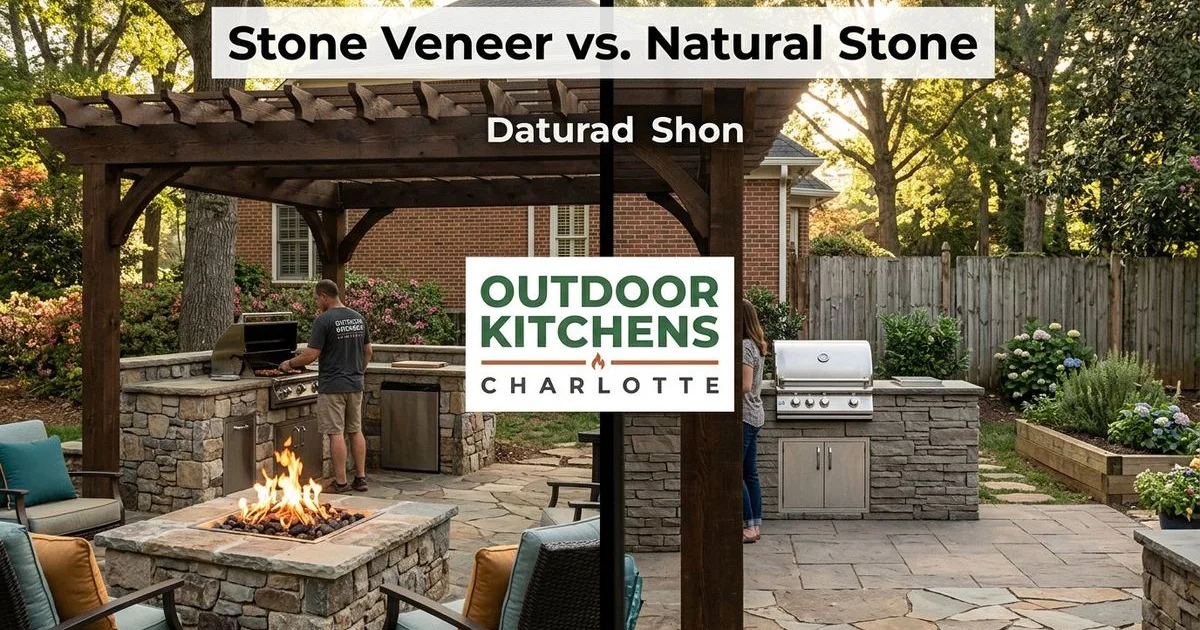
Comparing Stone Veneer vs Natural Stone for Outdoor Kitchens: Cost and Durability is usually the first hurdle project planners face.
Getting the base material right dictates the lifespan of the entire structure. Our team of Charlotte outdoor kitchen builders has seen many homeowners struggle to weigh these two distinct options. Let’s examine the raw data, structural requirements, and long-term realities to help you select the best fit for your Charlotte property.
Understanding the Difference Between Natural Stone and Stone Veneer
We often source popular regional varieties like Tennessee Fieldstone, which typically weighs between 35 to 50 pounds per square foot of wall face. Natural stone refers to quarried rock like fieldstone, flagstone, limestone, bluestone, and granite cut directly from solid formations.
A standard natural stone wall measures 4 to 8 inches thick. Our installers appreciate the authentic beauty of these materials, as every piece features unique color variations formed over millions of years. The sheer mass means a single linear foot can weigh several hundred pounds.
To simplify the selection process, evaluate these common material profiles:
- Full-Bed Natural Stone: 100% quarried rock, requires heavy-duty concrete footings.
- Manufactured Veneer: Cement-based composite, mounts directly to standard block.
- Thin-Cut Natural Veneer: Sliced authentic stone, combines real texture with reduced weight.
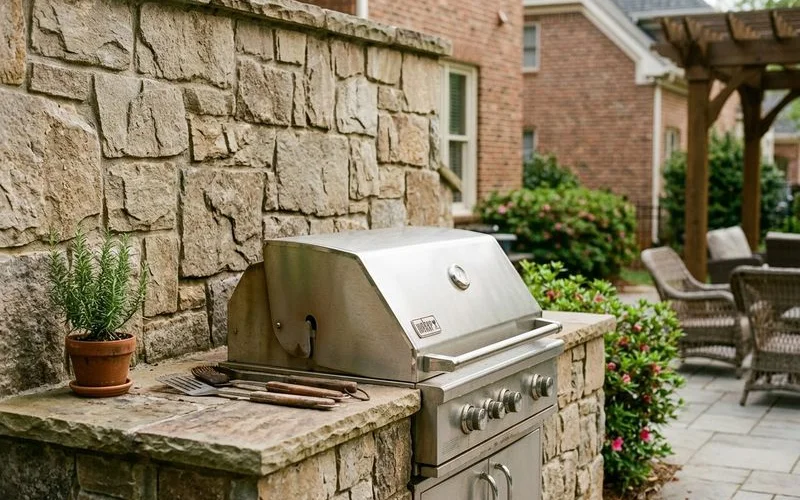
Manufactured stone veneer provides a completely different structural profile. We see top brands like Eldorado Stone and Cultured Stone dominating the 2025 US market because they accurately replicate natural textures.
This faux stone consists of Portland cement, lightweight aggregates, and iron oxide pigments cast into molds. These products are roughly one inch thick and weigh only 10 to 15 pounds per square foot.
Our crews find that thin-cut natural stone veneer offers a perfect middle ground. Slicing real quarried stone into thin panels reduces weight while delivering genuine mineral sparkle. Heavy-duty foundation engineering is rarely required for these thinner profiles.
Stone Veneer vs Natural Stone for Outdoor Kitchens: Cost and Durability in Charlotte
The financial investment dictates most material choices. Data from the 2025 National Kitchen & Bath Association trend report shows outdoor living budgets increasing by 15% nationwide.
We closely track local Charlotte pricing to provide accurate estimates. Natural stone material typically runs $30 to $60 per square foot. Installation adds another $20 to $40 per square foot.
Our baseline estimate for a 150-square-foot outdoor kitchen sits between $7,500 and $15,000 for natural stone walls alone.
Detailed Cost Breakdown
Manufactured stone veneer provides significant savings. Material costs range from $8 to $20 per square foot, with installation adding $10 to $25 per square foot.
We calculate that the same 150-square-foot layout costs approximately $2,700 to $6,750 using manufactured veneer. Thin-cut natural stone veneer falls in the middle, demanding $15 to $35 per square foot for materials. Installation rates for thin-cut rock mirror standard veneer pricing.
Foundation and Structural Costs
We incorporate foundation requirements into every preliminary site plan. Heavy materials require 12-inch thick reinforced concrete footings to prevent settling.
Lighter veneers attach directly to standard 6-inch concrete slabs without costly structural engineering. Our estimators always highlight these base preparation costs upfront. Homeowners partnering with experienced stone masonry outdoor kitchen builders will see these structural differences factored into the initial design.
| Material Type | Material Cost (Sq. Ft.) | Labor Cost (Sq. Ft.) | Foundation Requirement |
|---|---|---|---|
| Natural Stone | $30 - $60 | $20 - $40 | 12-inch reinforced concrete footing |
| Thin-Cut Natural Veneer | $15 - $35 | $10 - $25 | Standard 6-inch concrete slab |
| Manufactured Veneer | $8 - $20 | $10 - $25 | Standard 6-inch concrete slab |
Durability and Weather Resistance in Charlotte
Charlotte’s climate tests exterior structures with high humidity and unpredictable winter freeze-thaw cycles. We trust full-bed natural stone because it easily withstands these exact conditions.
Solid quarried rock will never crack or fade under normal weather stress. Historic stone walls across North Carolina have survived for over a century due to this inherent strength.
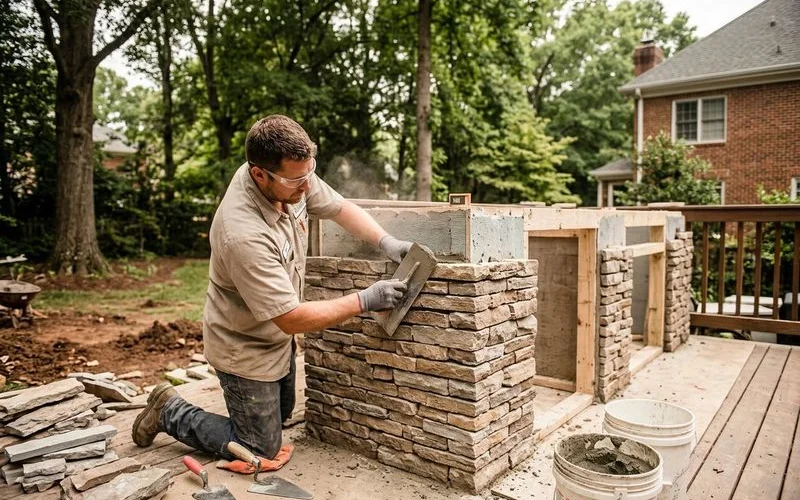
Our preferred manufactured products feature impressive modern warranties lasting 30 to 50 years. The adhesion between the thin pieces and the concrete block substrate remains the most common failure point. Trapped moisture compromises the mortar bond over time.
Managing Moisture Build-Up
We prevent individual pieces from falling off by using high-performance, polymer-modified mortars. Bonding agents compliant with ANSI A118.15 standards provide over 400 psi of shear strength to combat structural movement.
Charlotte averages 43 inches of rain annually, making proper drainage essential. Our installation protocol always includes a dedicated rainscreen drainage plane, like Keene Driwall, to keep the substrate dry.
Thick natural stone installations are far more forgiving. Solid material simply lacks a hollow cavity for water to pool.
Installation Complexity and Timeline
Our crews often need two to three weeks just to complete the masonry phase on a standard project. Masons must individually select, chip, and fit each heavy rock into a cohesive pattern. Handling heavy pallets requires skid steers and specialized lifting equipment on site.
We remind clients that Type S mortar, the industry standard for load-bearing stone, needs 28 days to reach full structural cure. The labor requirements differ wildly between these material categories. Manufactured options move much faster.
Streamlined Veneer Application
We utilize prefabricated corner pieces to quickly wrap edges and columns. Factories design these synthetic pieces with perfectly flat backs for rapid adhesion.
A skilled contractor can finish a 150-square-foot facade in just three to five days. Our project managers constantly monitor substrate preparation to prevent expensive future repairs.
Speed must never compromise fundamental quality. Cutting corners during the initial moisture barrier application guarantees premature failure.
Aesthetic Considerations and Design Impact
We love how genuine materials develop a rich patina after years of sun and rain exposure. Authentic quarried rock delivers a visual depth that synthetic materials struggle to perfectly duplicate. The organic textures give backyard structures a permanent, high-end presence.
Our team frequently pairs traditional architectural styles with the irregular shapes of raw fieldstone. Premium manufactured alternatives look incredibly convincing today. From five feet away, even veteran builders have trouble distinguishing top-tier synthetic casts from real rock.
Expanding Your Color Palette
We frequently install transitional designs using crisp, modern profiles like Cultured Stone’s “Pro-Fit Terrain” series. Contemporary spaces benefit from these consistent geometric shapes and clean lines.
Natural options restrict your palette to the minerals native to specific quarries. Our designers use synthetic choices to provide virtually limitless chromatic variations.
Current 2025 landscape design data highlights high demand for modern “Greige” and cool charcoal tones. These trendy colors are easily sourced in manufactured collections.
Making the Right Choice for Your Charlotte Project
We help clients evaluate their specific timeline, budget, and desired aesthetic before breaking ground. Authentic rock serves as the superior long-term investment for exposed, weather-beaten locations. The actual structural longevity depends heavily on the contractor’s skill level.
We recommend high-quality veneer if you want rapid installation under a covered pavilion or pergola. A poorly executed natural rock facade will crumble faster than a flawlessly executed synthetic one. Evaluating Stone Veneer vs Natural Stone for Outdoor Kitchens: Cost and Durability ensures you maximize your property’s value.
We encourage you to partner with verified stone masonry professionals who understand North Carolina’s distinct building codes. A well-built exterior cooking space quickly becomes the focal point of your property.
We are ready to answer your questions and help you lock in the perfect material for your upcoming build.
Michael Carter
Outdoor Living Design Specialist
15+ years designing outdoor kitchens across Charlotte, NC.