What Size Grill Island Do You Need? A Complete Sizing Guide
Calculate the right grill island size for your Charlotte backyard. Consider cooking style, guest count, and available space with our easy sizing guide.
Michael Carter
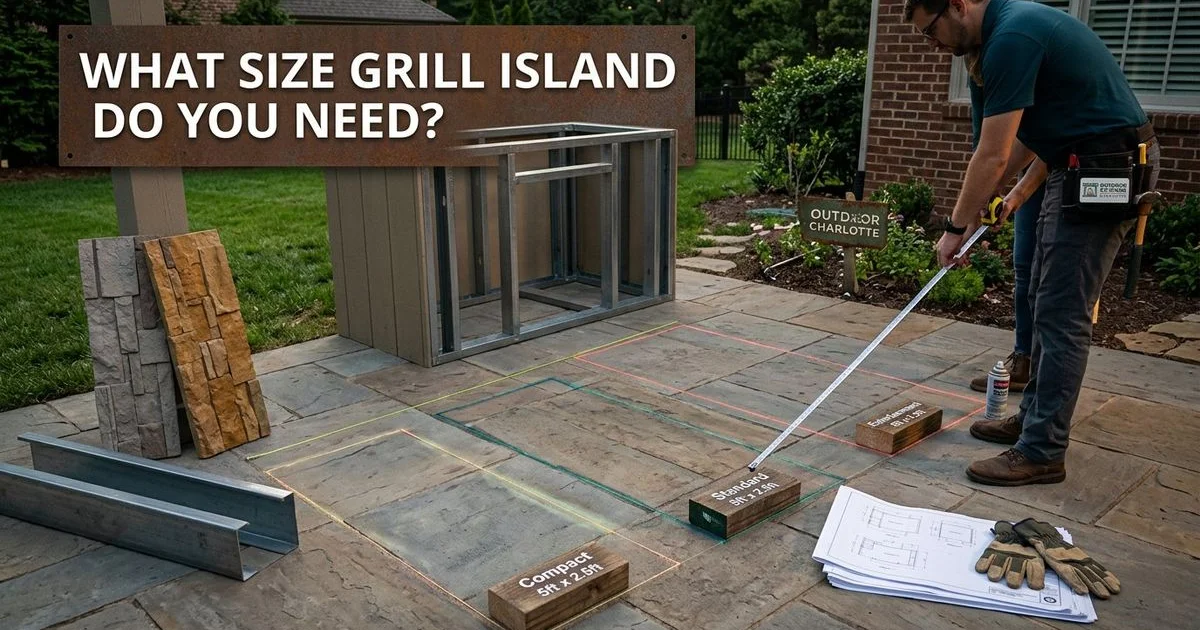
Our professional service team sees this exact scenario play out every week across the US. Homeowners get thrilled about planning an outdoor kitchen, but quickly hit a wall when asking exactly what size grill island do you need.
This confusion makes perfect sense.
As Charlotte outdoor kitchen specialists, we find that getting the dimensions right requires balancing appliances, seating, and traffic flow. A setup that is too small frustrates the cook, while an oversized island devours your patio and inflates your budget.
Let’s look at the data, what it is actually telling us about spatial planning, and then walk through the exact formula to size your project correctly.
Start With Your Grill Width
The built-in grill is the anchor appliance of any outdoor setup, and its width sets the foundation for your island sizing. Built-in grills for outdoor kitchens come in several standard widths, each suited to different cooking needs and audience sizes.
- 26 to 30 Inches: This is a compact option suited for couples or small families who cook for two to four people most of the time. These grills typically have three burners and enough cooking surface for eight to twelve burgers simultaneously.
- 32 to 36 Inches: This mid-range option is the most popular size for US outdoor kitchens in 2026. With four burners, you have enough space to cook a main protein and sides at the same time. Specific models like the Blaze Premium LTE+ 32-inch or the DCS Series 9 36-inch dominate this category because they balance generous cooking space with a manageable footprint.
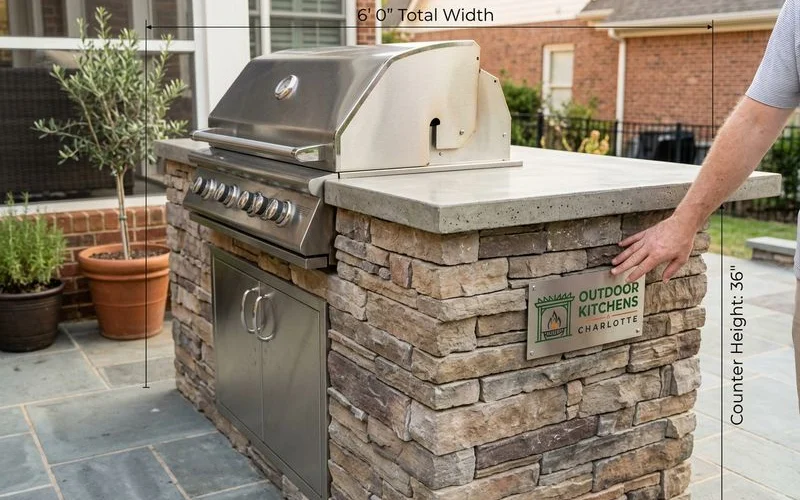
- 38 to 42 Inches: This is the choice for serious cooks and frequent entertainers. These large grills have five or six burners and can handle cooking for ten to twenty people. If you host family reunions or neighborhood cookouts, this size gives you room to work.
- 44 to 54 Inches: This is a commercial-grade option for homeowners who want the maximum cooking surface available. These are less common in residential installations but show up in high-end US outdoor kitchens where entertaining is a frequent and large-scale activity.
Calculate Your Island Length
Once you know your grill width, you can calculate the minimum island length. The formula is straightforward: take the grill cutout width and add enough counter space on each side.
Industry Standard: The National Kitchen & Bath Association (NKBA) 2026 design guidelines recommend a minimum 15 to 24 inches of landing area on one side for prep, and 12 to 18 inches on the other for resting finished food.
This gives you room to set down plates, rest utensils, and handle large cuts of meat safely. For a 32-inch grill, the minimum island length is roughly five and a half to six feet. For a 36-inch grill, plan for at least six to six and a half feet.
If you want to add additional appliances alongside the grill, add their widths plus six inches of spacing between each appliance. To make the math easier, here is a quick breakdown of common appliance widths to add to your total:
| Appliance Type | Average Width to Add |
|---|---|
| Built-In Refrigerator | 24 inches |
| Pull-Out Trash Center | 18 inches |
| Outdoor Sink | 15 to 18 inches |
| Side Burner | 12 to 15 inches |
Determine Your Island Depth
Standard Cooking Depths
The depth of a grill island, measured from front to back, is driven by the depth of your deepest appliance plus counter overhang. Most built-in grills require a cutout depth of twenty to twenty-four inches.
Add a two-inch counter overhang on the front and you are looking at a minimum island depth of twenty-six to twenty-eight inches.
Pro-Tip: Standard outdoor kitchen counters sit at 36 inches high. If you install a built-in outdoor refrigerator, specialists at Outdoor Kitchen Insider recommend raising the counter height to 38 inches to accommodate the appliance comfortably without pinching the hinges.
Accommodating Bar Seating
If you want bar seating on the opposite side of the island from the grill, you need to add twelve to fifteen inches for the knee space overhang and another four to six inches for the structural support. A grill island with back bar seating typically has an overall depth of thirty-six to forty-two inches.
Keep in mind that the deeper the island, the more space it consumes on your patio. In the US, where many homes have patios in the twelve to sixteen foot depth range, an island that is forty-two inches deep uses up about three feet of that depth.
Make sure you leave at least thirty-six inches of clear space behind the island for traffic flow. Ideally, leave forty-eight inches if the area behind the island is a primary walkway.
Sizing for Additional Features
Bar Seating Requirements
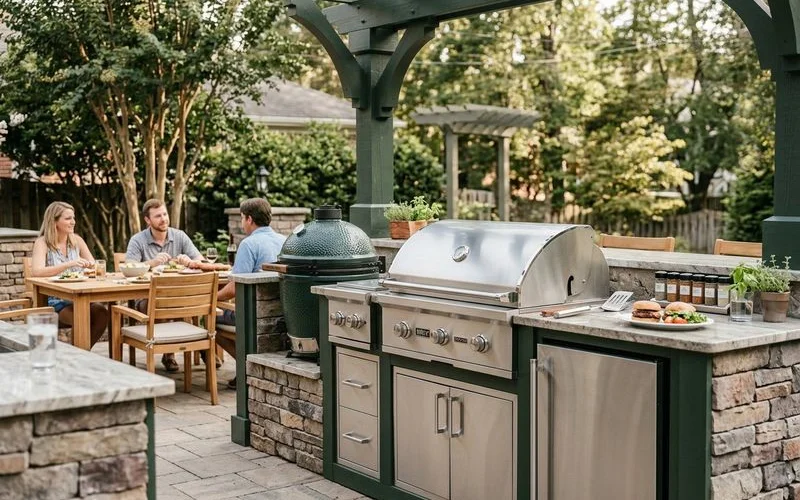
Bar seating is a highly requested feature in US outdoor kitchens. Each bar stool needs about twenty-four inches of counter width. If you want seating for four, plan for eight feet of unobstructed counter on the seating side.
The counter height for bar seating should be forty-two inches, which is higher than the standard thirty-six-inch counter height on the cooking side. To pair with this, standard bar stools sit at 28 to 33 inches high.
Specialty Cookers and Accessories
A built-in kamado cooker like a Big Green Egg needs its own dedicated section of the island with reinforced support. The Large Big Green Egg has an external diameter of 22 inches, requires a table opening of roughly twenty-nine inches to clear the hinge, and weighs exactly 162 pounds. The island structure beneath it needs to be heavily engineered to support this dense ceramic weight.
A trash and recycling pullout requires about eighteen inches of cabinet width and is easy to overlook during the planning phase. Having a built-in trash solution is a small detail that makes a big difference in keeping your cooking area clean.
Storage Solutions
Storage cabinets and drawers are another consideration that affects island length. Standard outdoor kitchen drawers are available in fifteen-inch, eighteen-inch, and twenty-four-inch widths from premium brands like Summerset and Coyote. Cabinets with doors typically come in twenty-four-inch or thirty-inch widths.
We highly recommend including at least one drawer and one cabinet section.
This dedicated storage keeps your grilling tools, spices, plates, and cleaning supplies organized and protected from the weather.
Space Requirements Around the Island
The grill island itself is only part of the space equation. You also need clear space around the island for safe cooking, comfortable movement, and traffic flow.
Based on 2026 architectural safety standards, you should follow these specific clearance guidelines:
- Front Clearance: Leave at least forty-eight inches of clear space in front of the grill to give the cook room to work and step back safely.
- Rear Clearance (With Seating): Behind any bar seating, leave thirty-six inches of clear space so people can get in and out of bar stools easily.
- Side Walkways: On the ends of the island, preserve at least twenty-four inches of clear space for lateral walkway access.
- Combustible Buffer: If the end of the island is adjacent to a wall or fence, ensure a minimum six to twelve-inch air gap from combustible materials according to your grill manufacturer’s instructions.
Add up the island dimensions plus the clearances, and you get the total space footprint. For a seven-foot island with forty-eight inches of front clearance, thirty-six inches of rear clearance, and twenty-four inches of side clearance, you need a total area of roughly seven feet by twelve feet, or eighty-four square feet.
What Size Grill Island Do You Need? Common US Sizes
Based on our experience building outdoor kitchens across the US, here are the most common island sizes and what they accommodate.
Our team consistently sees these four sizes dominate residential projects. Each footprint serves a distinctly different lifestyle.
- The Six-Foot Starter Island: This compact option fits on most standard patios. It accommodates a 30 to 32 inch grill with counter space on both sides. This is a great starter island for homeowners who want the experience of a built-in grill without committing to a massive footprint.
- The Eight-Foot Family Island: This is the most popular size in our 2026 projects. It fits a 36-inch grill, a small refrigerator or side burner, and provides highly functional counter space. This is the sweet spot for families who cook outdoors regularly but do not require commercial-scale equipment.
- The Ten-Foot Entertainer: This layout easily accommodates a 36 to 42 inch grill, a side burner, a refrigerator, and bar seating for two to three. This is the most common choice for homeowners who host neighbors and friends on a frequent basis.
- The Twelve-Foot-Plus Estate Island: This full-featured option includes a large grill, multiple appliances, a sink, extensive counter space, and seating for four or more. These islands are most common in larger properties where backyard space is generous and unrestricted.
Getting Professional Help With Sizing
Figuring out the answer to “what size grill island do you need?” requires balancing your cooking habits, entertainment style, available space, and budget. Our team designs built-in grill islands for homeowners every week.
A properly scaled layout maximizes functionality without overwhelming your outdoor area. We measure your space and discuss your cooking habits to help you determine the optimal size for your specific situation.
The result is a setup that feels perfectly proportioned, making every cookout a great experience.
Reach out today to start planning your ideal backyard layout.
Michael Carter
Outdoor Living Design Specialist
15+ years designing outdoor kitchens across Charlotte, NC.